Artificial Turf Installation in Salmon Creek, WA
When the lawn has finally lost to the trees. Pet-friendly and play-ready synthetic lawns installed over a free-draining base — no mowing, no mud, green through a Pacific Northwest winter.
Free Estimate in Salmon CreekArtificial Turf Installation in Salmon Creek: what is different here
The trees planted when Salmon Creek subdivisions were built are now twenty-five years tall, and a lot of back yards that grew grass fine in 2005 are moss today. Turf is frequently the honest answer once shade has passed the point where any grass will hold.
Because these yards are usually replacing an existing failing lawn rather than starting from raw ground, the install includes stripping the old turf and moss layer and dealing with whatever drainage problem helped kill it. Laying synthetic turf over ground that already ponds just gives you a puddle with green carpet on it.
Fir and cedar needle drop is the one ongoing maintenance item here — blowing the surface off a couple of times a year keeps debris from composting in the fibers and growing moss on top of the turf.
How we build it
- Excavation and geotextile separation over native clay
- Compacted free-draining crushed rock base
- Stretched and secured turf, not loose-laid
- Glued and stapled seams on seam tape
- Odor-controlling infill for pet installations
- Optional shock pad under play areas
Artificial turf earns its keep in exactly the situations where real grass struggles here: deep shade under firs, narrow side yards that never dry out, dog runs that turn to mud by November, and small back yards where mowing is more hassle than the lawn is worth.
About 15 minutes south of Ridgefield. Estimates in Salmon Creek are free, and the price we put in writing is the price.
Full detail on how we build artificial turf installation · Everything we do in Salmon Creek
Artificial Turf Installation we have built
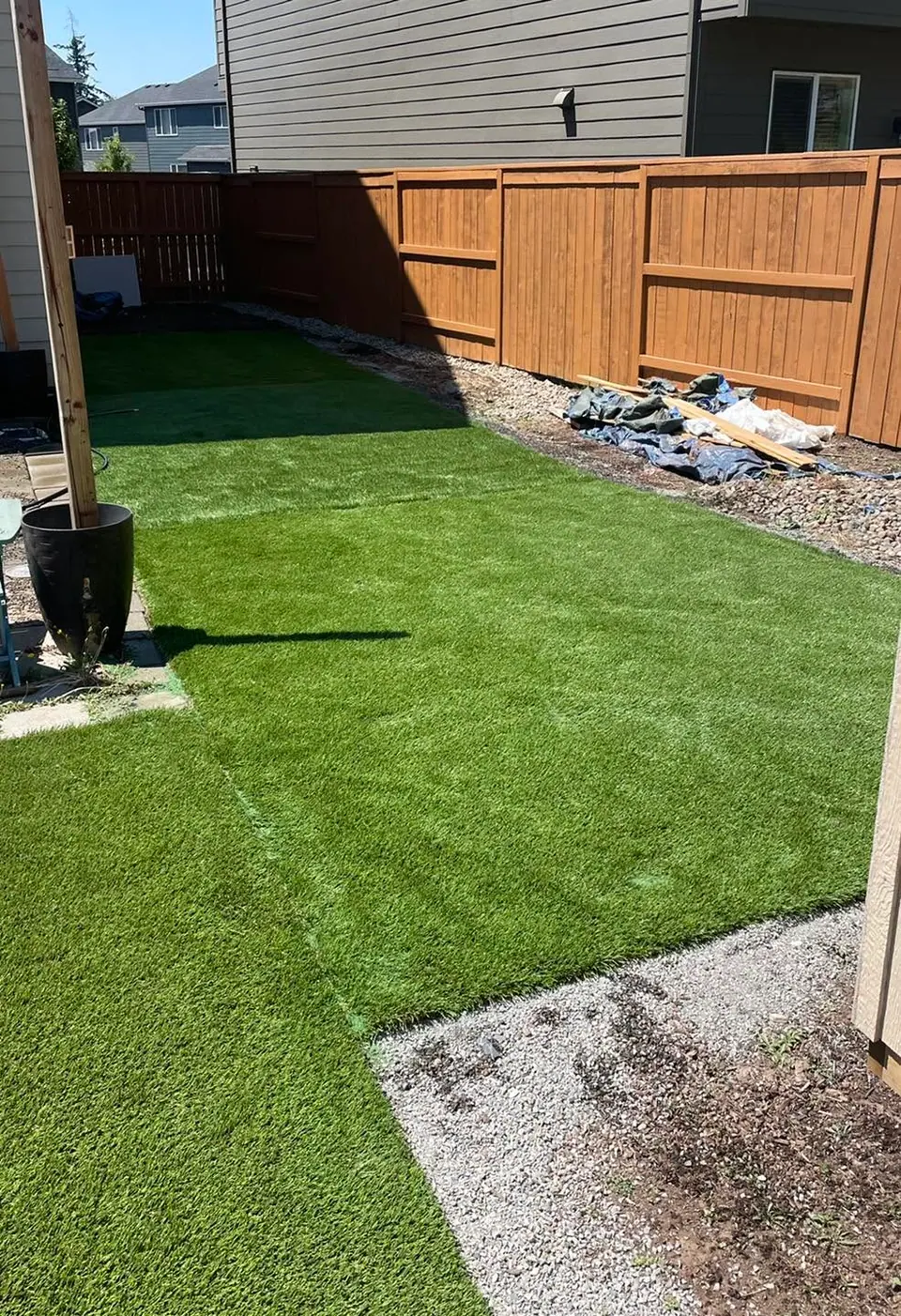
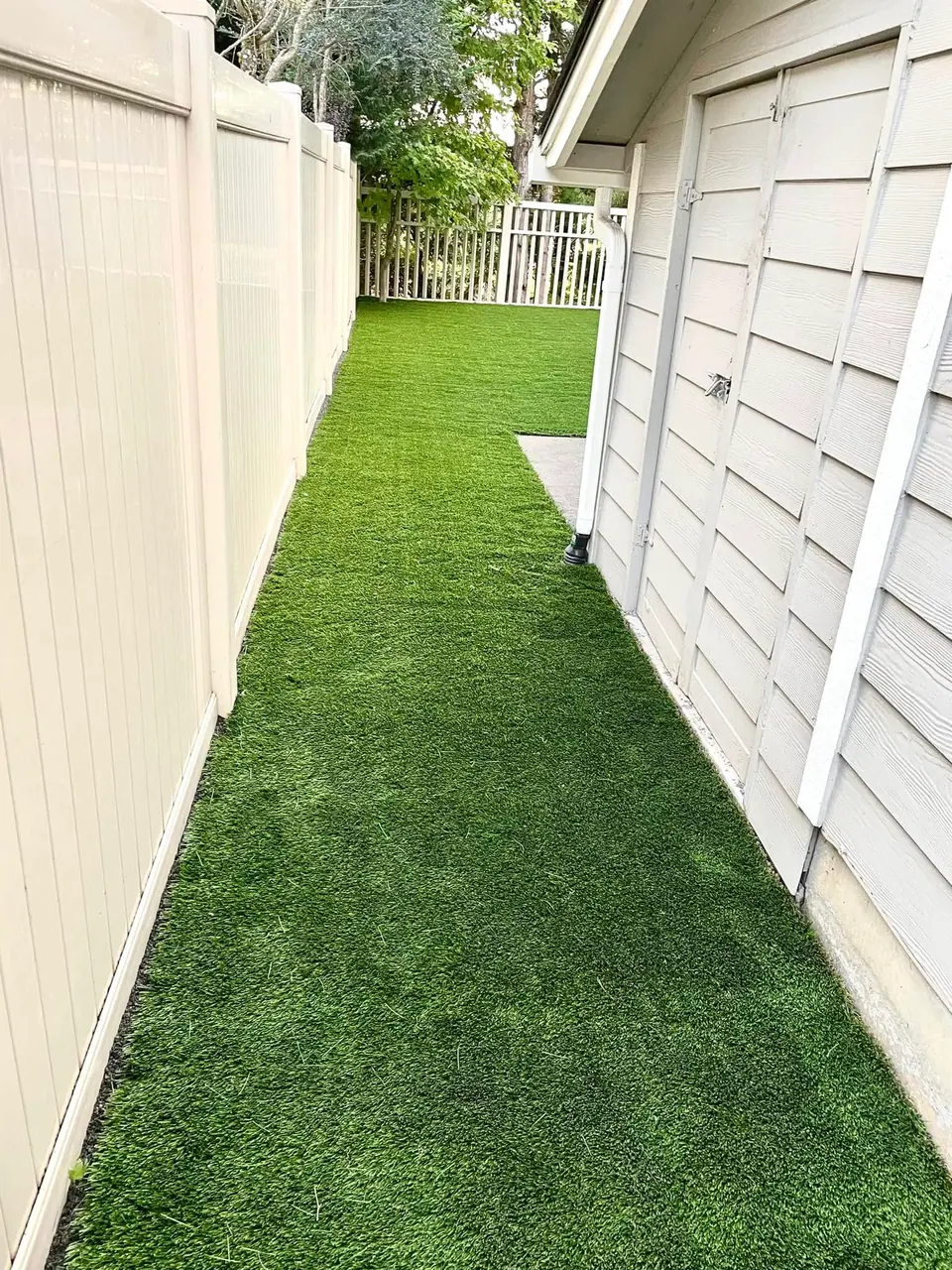
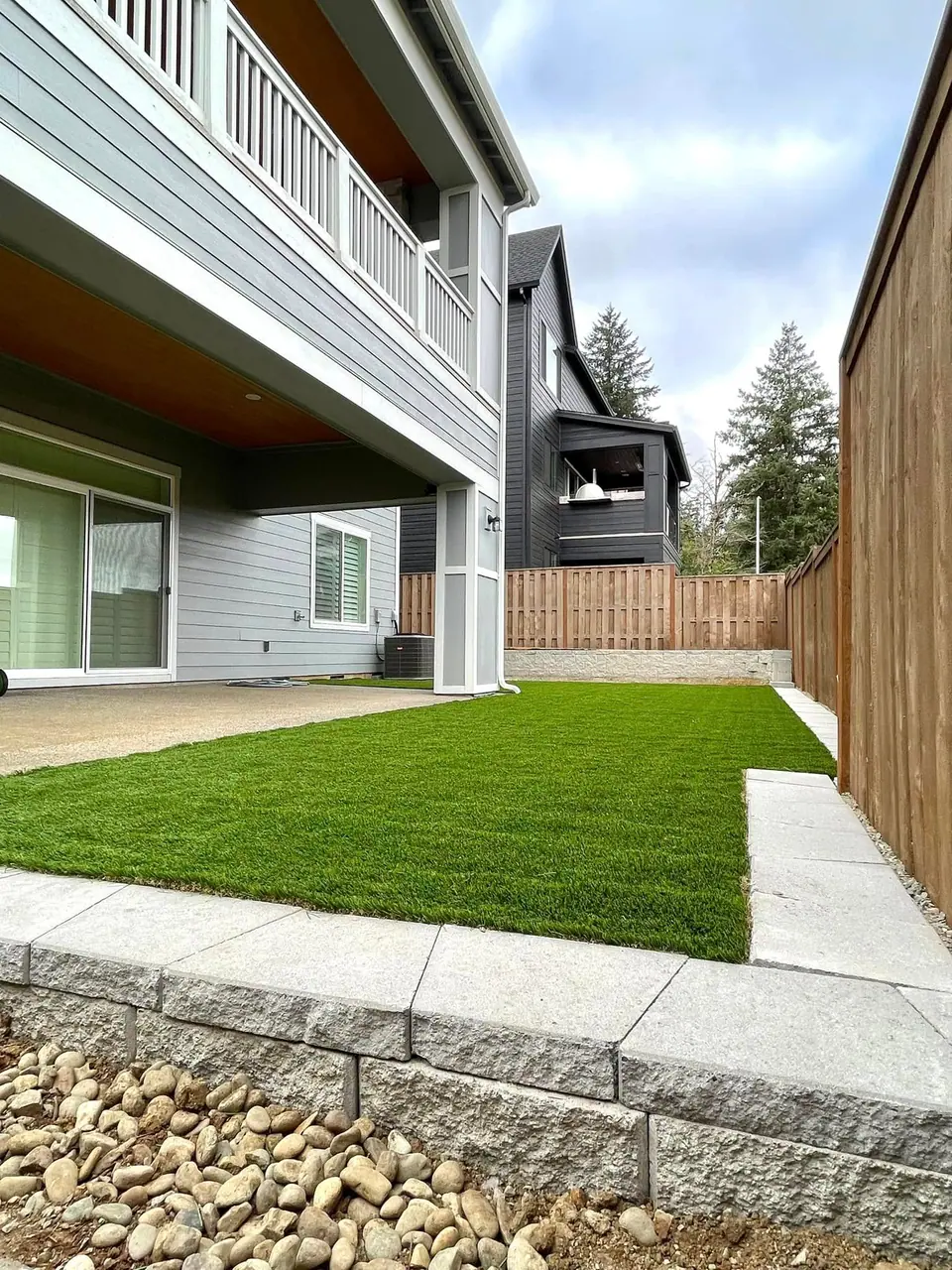
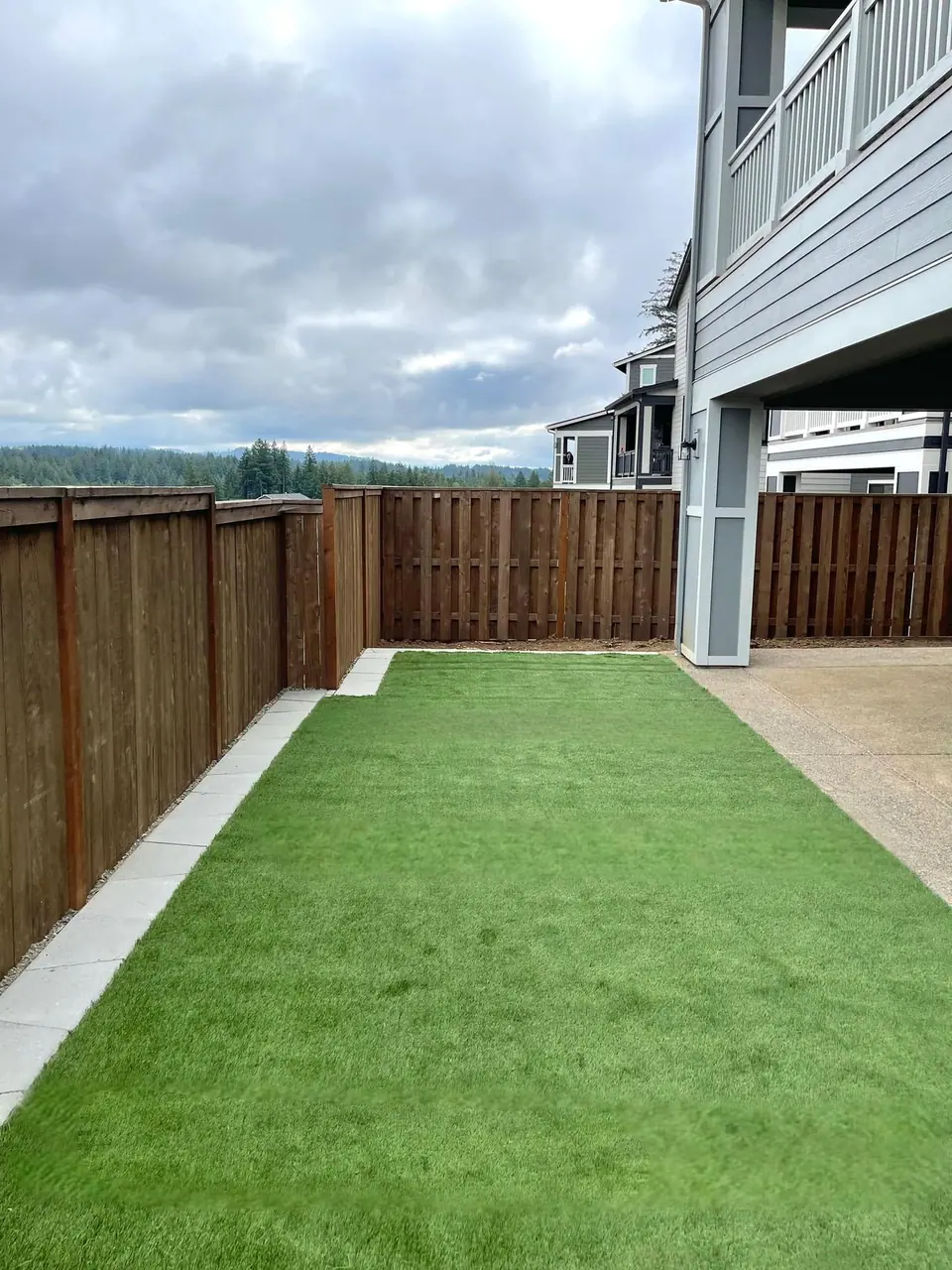
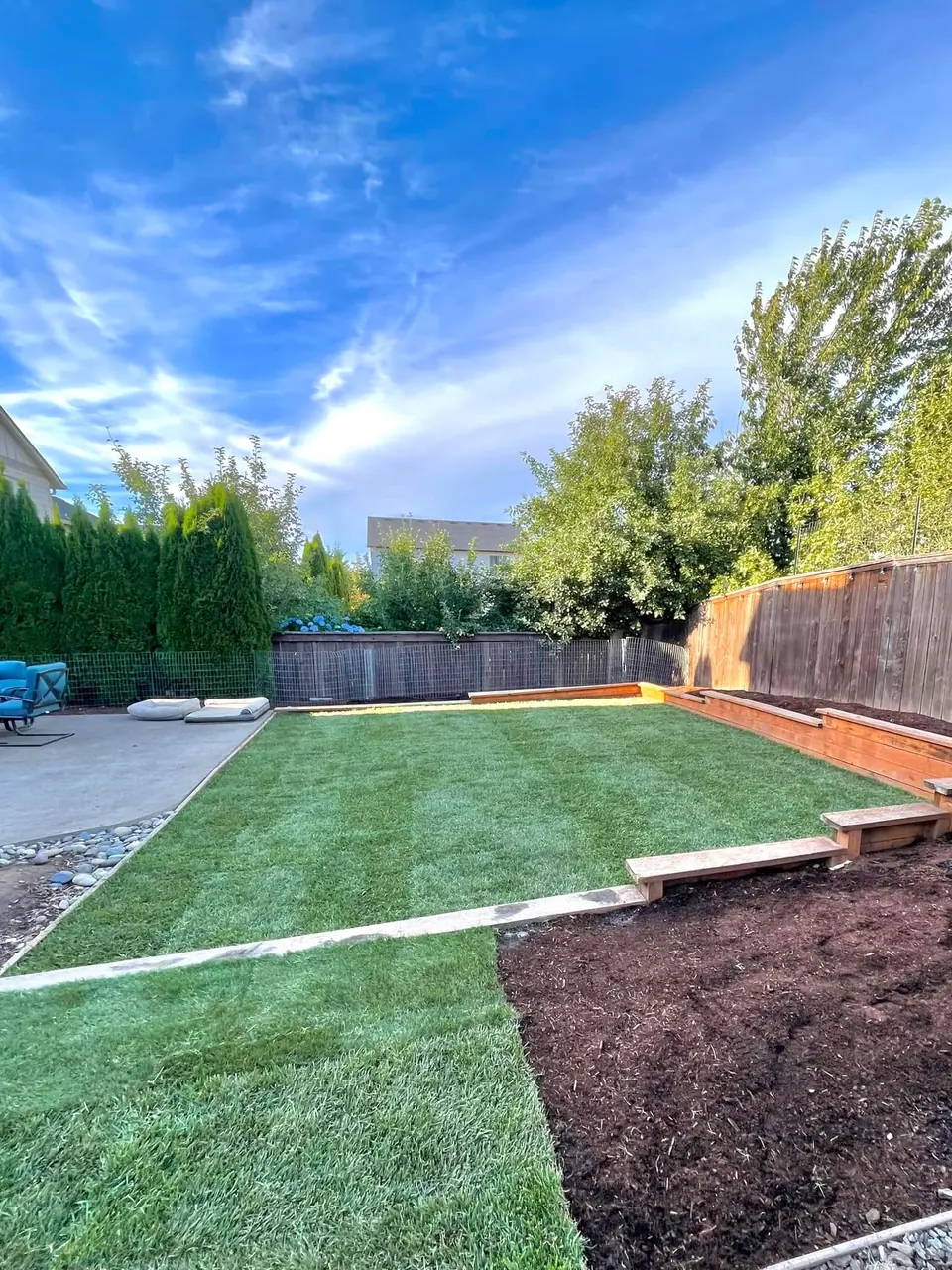
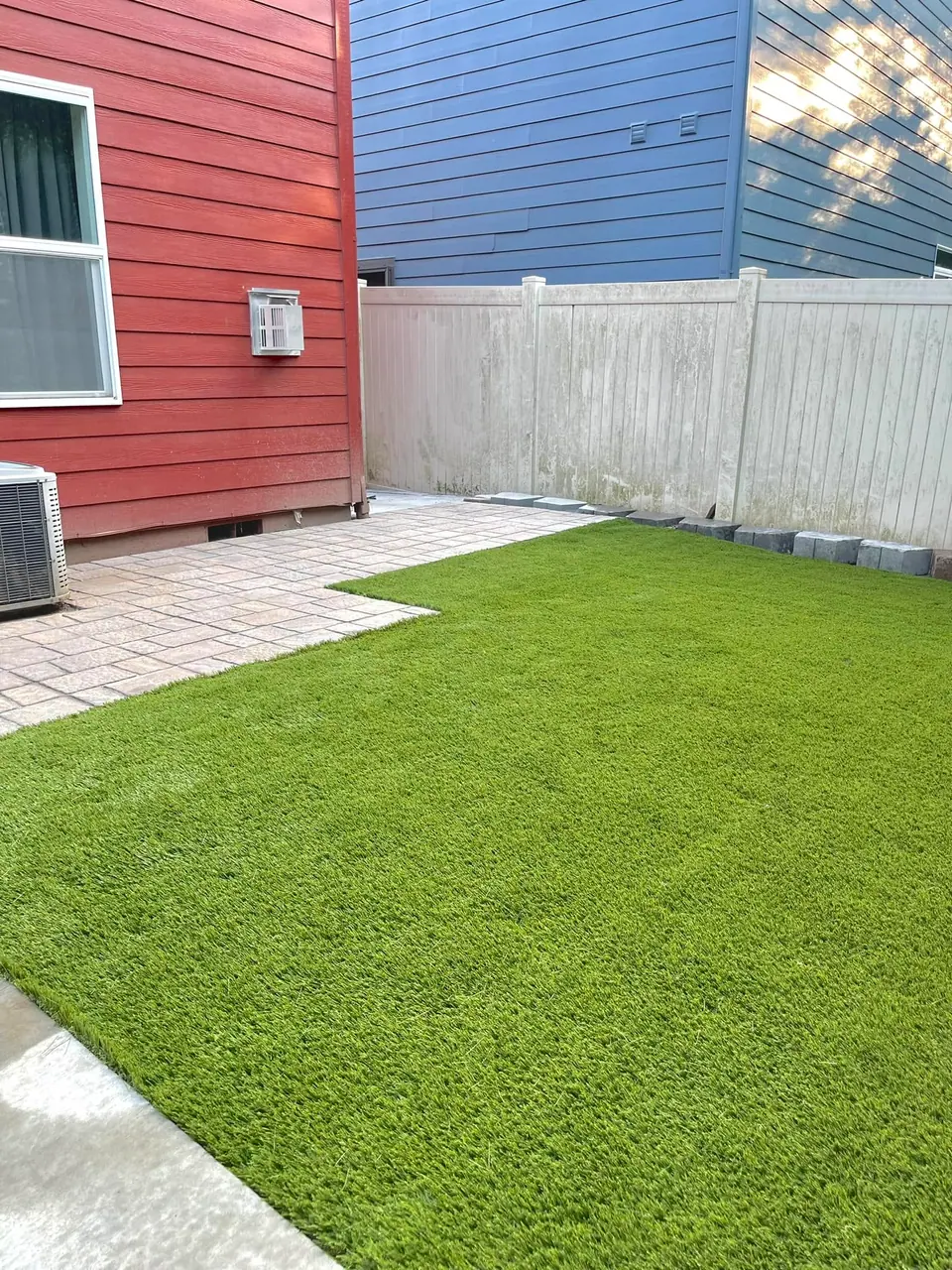
Artificial Turf Installation in Salmon Creek
Free on-site estimates across Clark County. We walk the property with you, tell you what it actually needs, and put a fixed price in writing.
Artificial Turf Installation in Salmon Creek: questions we get
Our lawn is now mostly moss under grown trees. Is turf the answer?
It is one of three honest answers, alongside shade planting and thinning the canopy. What it is not is a reason to keep reseeding. Trees planted as saplings in the late 1990s have changed these yards permanently, and grass in genuine deep shade will keep reverting to moss every winter.
Will moss grow on the turf instead?
It can grow on the surface if organic debris is left to break down there, which under a mature canopy is a real consideration. Clearing leaves and needles before they mat down is the whole of the prevention. It is a housekeeping task rather than a failure of the installation.
Can turf be installed around established tree roots?
Yes, with care. We work around significant roots rather than cutting them to achieve a uniform base depth, adjusting locally where needed. Cutting major roots from a mature fir to make a lawn fit risks losing a tree worth considerably more than the turf.
What happens to thirty years of accumulated bark and old lawn?
It comes out and gets hauled away, and there is usually more of it than expected. Decades of bark top-ups, old landscape fabric and dead lawn all have to be excavated to reach ground we can build a base on. That volume belongs in the quote.
Why has the yard got wetter as the trees have grown?
Partly compaction over three decades, partly the original drainage silting up or its outlet disappearing under bark and leaf litter, and partly the canopy keeping the ground from ever drying. It is rarely one cause, which is why we look at the whole yard rather than just the lawn area.
Should turf wait until the rest of the renovation?
If a wider renovation is coming, sequence it so drainage and grading are done once. Turf is one of the later items, like lawn, because it sits on top of everything else. Installing it before a drainage fix usually means lifting part of it again.
Can turf go where the old timber wall is being replaced?
Yes, but after the wall, not before. Rebuilding a wall requires excavation behind it, and a turf area laid up against a wall that is about to be replaced will be damaged getting access. Wall first, then base, then turf.
Does turf suit a yard we plan to sell in a few years?
It shows well, particularly against the alternative of a mossy, patchy lawn in deep shade. We would still put drainage and any structural repairs ahead of it, because those are the things a buyer will price against you. Turf is presentation; drainage is protection.