Artificial Turf Installation in Clark County, WA
Pet-friendly and play-ready synthetic lawns installed over a free-draining base — no mowing, no mud, green through a Pacific Northwest winter.
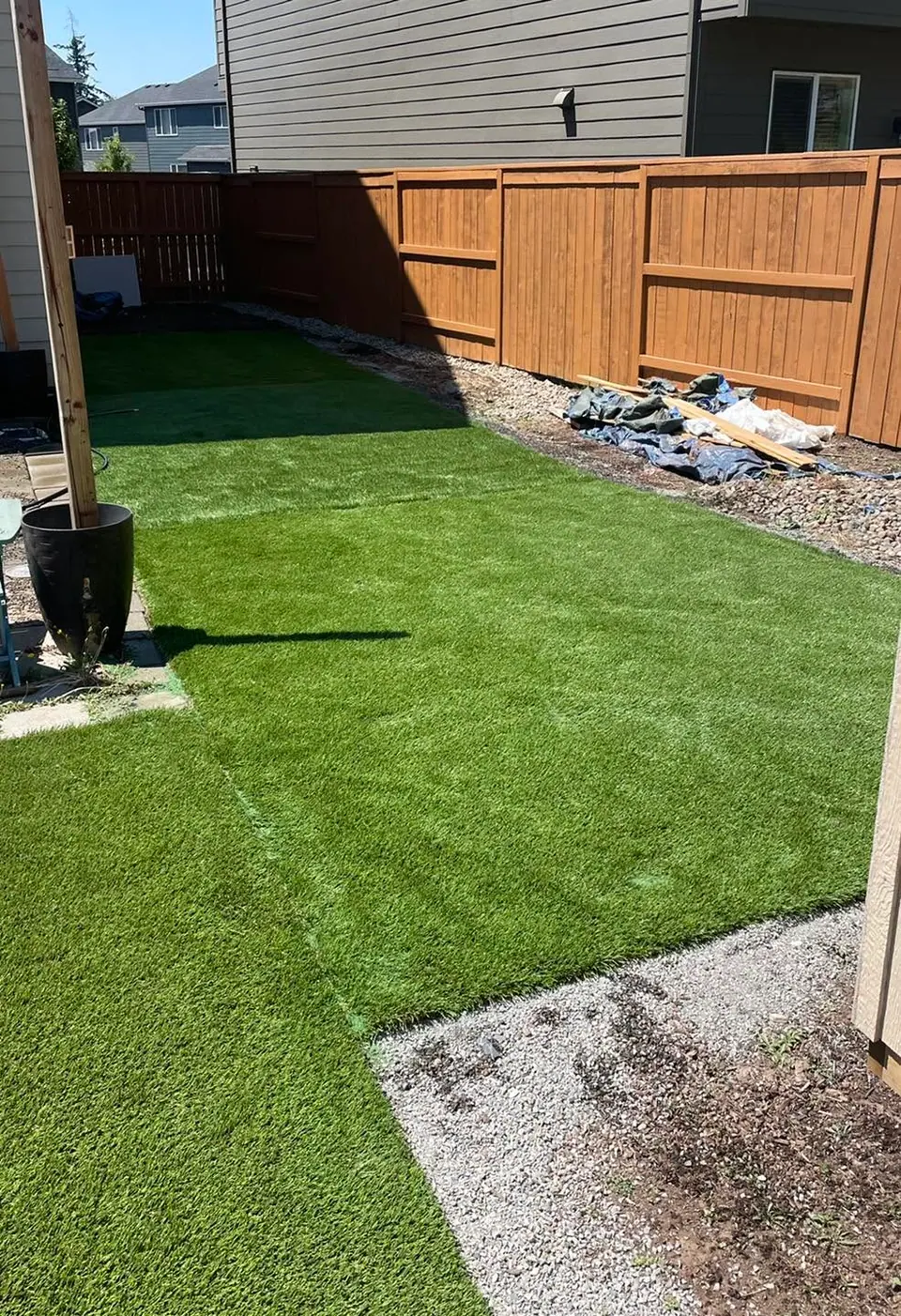
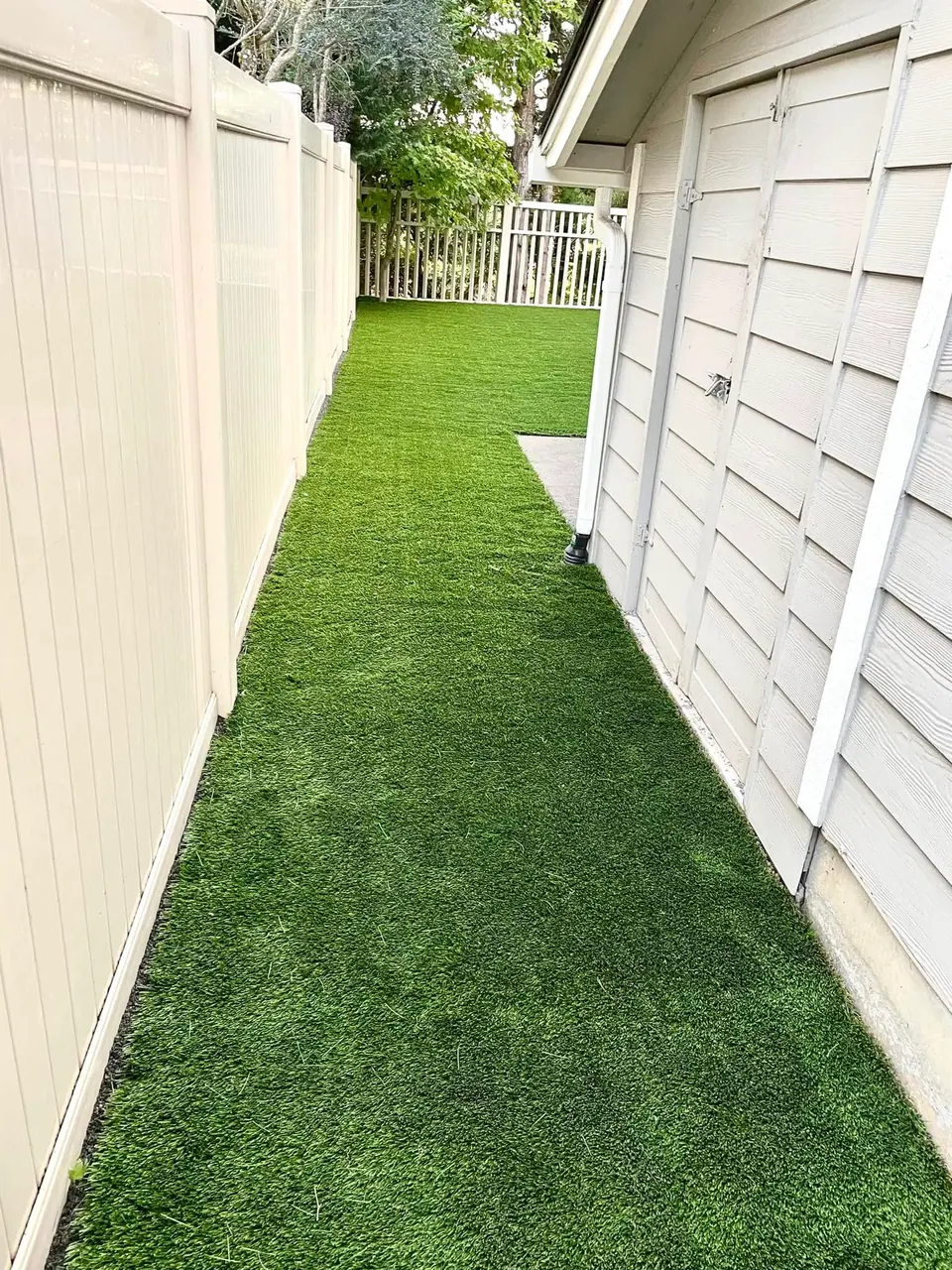
Get a Free EstimateArtificial turf earns its keep in exactly the situations where real grass struggles here: deep shade under firs, narrow side yards that never dry out, dog runs that turn to mud by November, and small back yards where mowing is more hassle than the lawn is worth.
Why installation quality matters more than the turf you pick
Every turf product on the market looks good in the showroom. What separates a lawn that still looks right in year eight from one that ripples, flattens and smells is entirely in the base and the seaming.
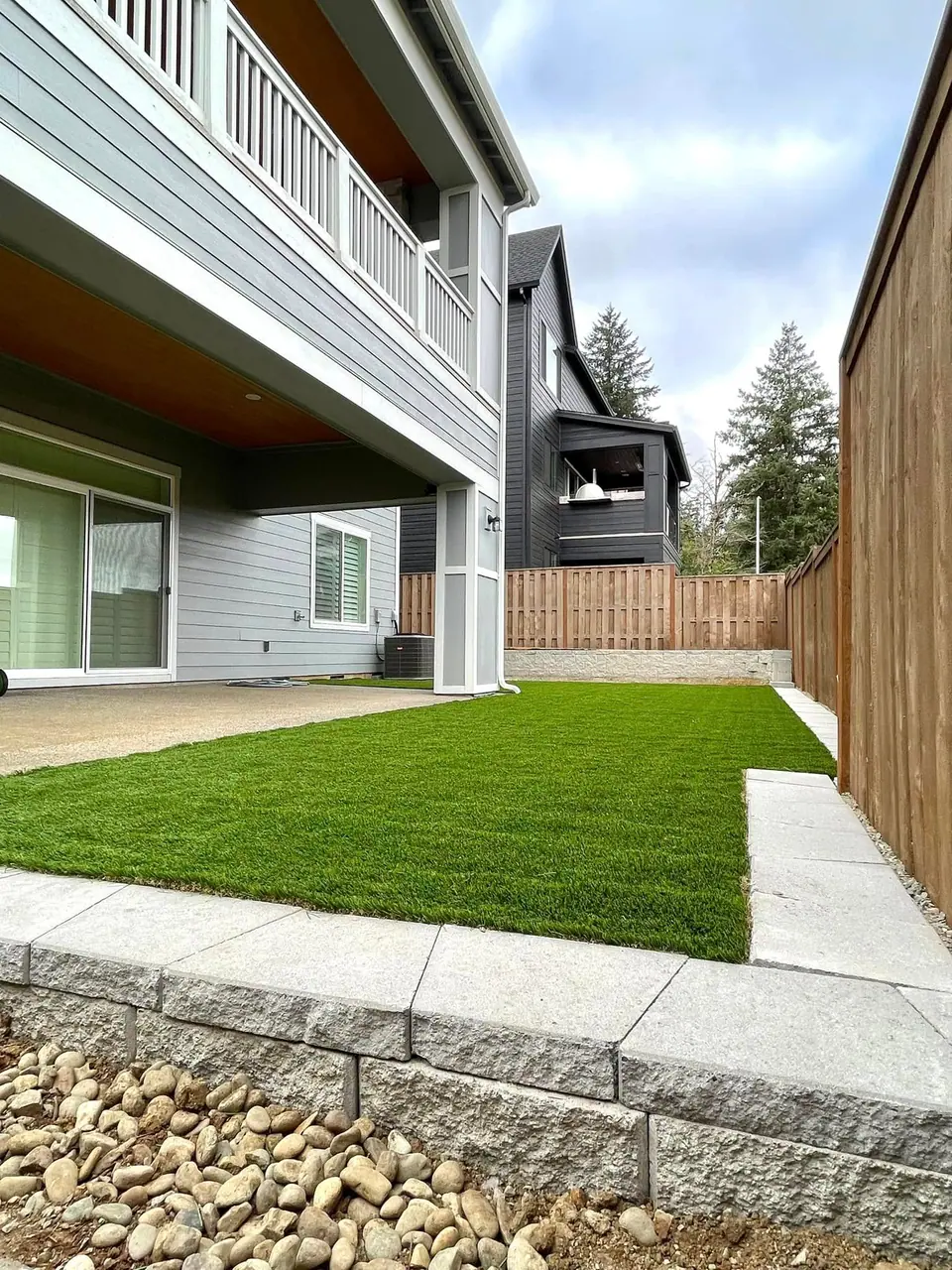
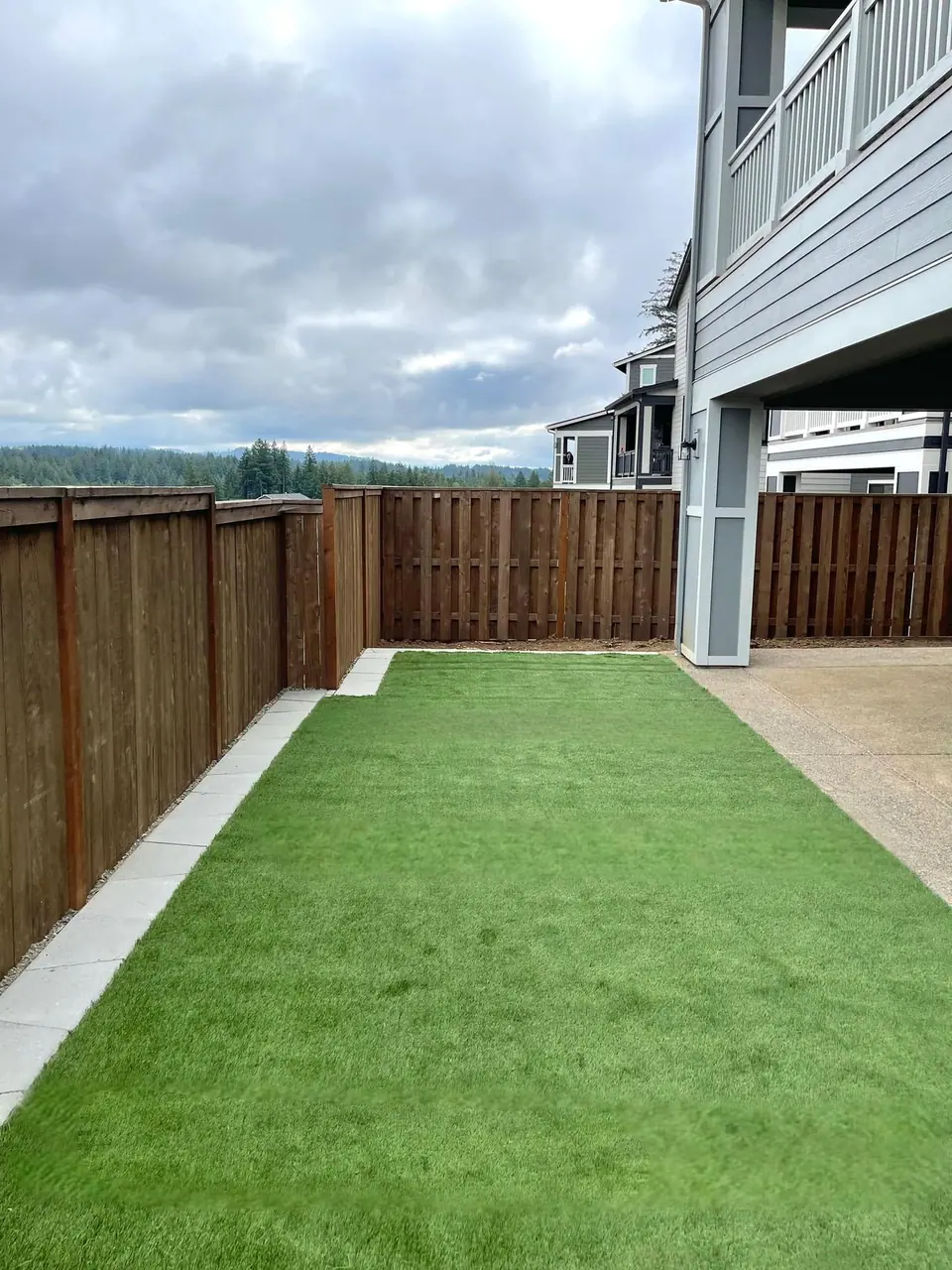
We excavate the native soil out, lay geotextile, and build a compacted crushed rock base that drains vertically rather than trapping water at the surface. The turf is stretched, not just laid, so it does not relax into wrinkles when it warms up. Seams are glued and stapled on a seam tape so they disappear, and the perimeter is nailed into a solid edge.
Infill gets brushed in to hold the blades upright and give the surface its weight and feel. For dog areas we use an infill that does not hold odor, and we build the base so urine flushes straight through instead of sitting in it.
Where turf works best
Shaded yards under mature evergreens where grass will never fill in. Dog runs and pet areas. Kids’ play spaces, often over a shock pad. Narrow side yards. Small urban back yards. Rooftop decks and patio surrounds. Putting greens.
Where we will tell you not to use it
Large open sun-baked lawns, where the surface gets genuinely hot in July and the cost per square foot stops making sense. Areas where you actually want the cooling and stormwater benefit of living turf. We would rather talk you out of a bad application than install something you regret.
What is included
- Excavation and geotextile separation over native clay
- Compacted free-draining crushed rock base
- Stretched and secured turf, not loose-laid
- Glued and stapled seams on seam tape
- Odor-controlling infill for pet installations
- Optional shock pad under play areas
Every quote is fixed and in writing. We walk the site, tell you what the job actually needs, and price it. If we find something during the walkthrough that changes the scope, you hear it then — not as a change order halfway through.
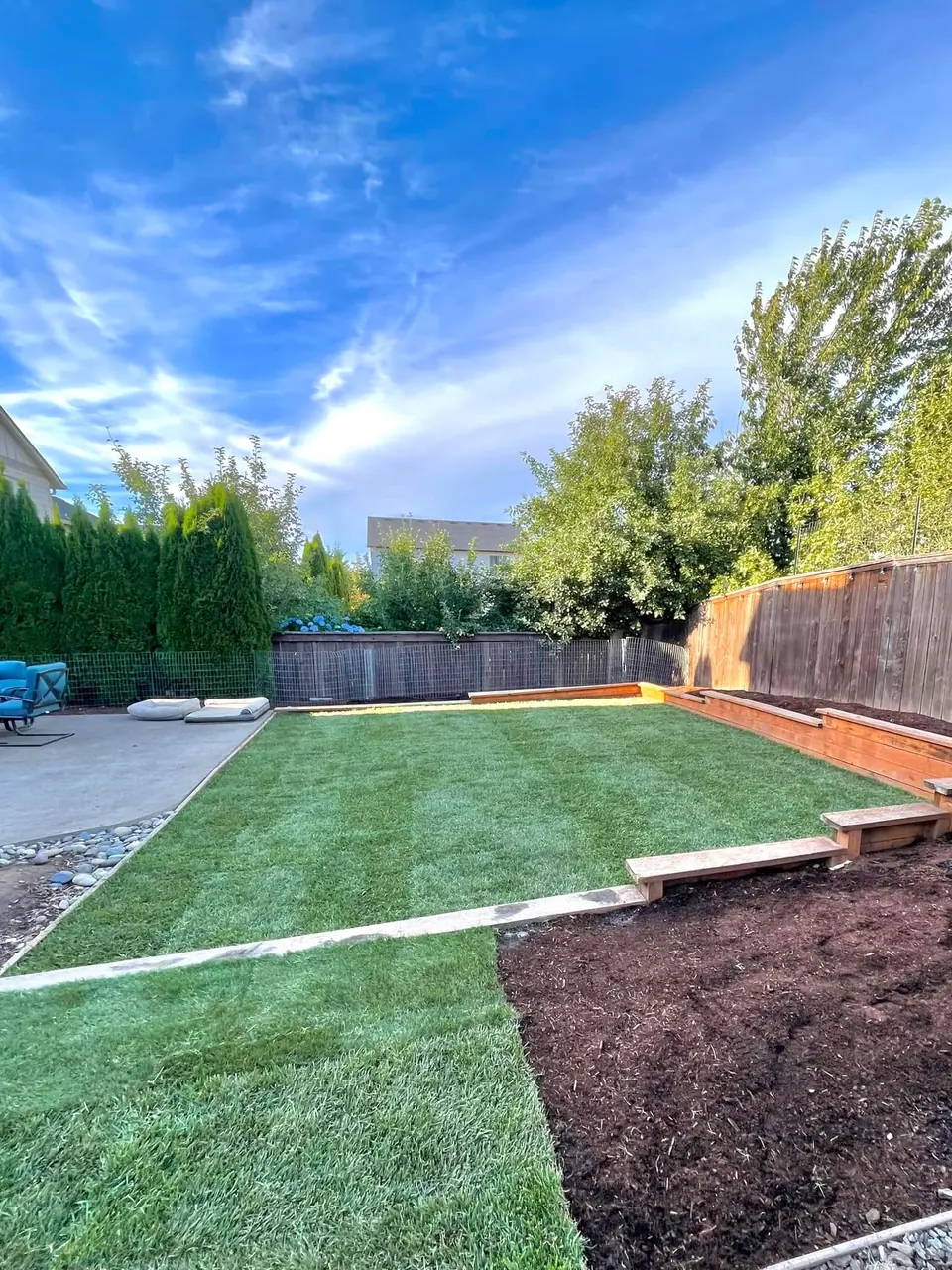
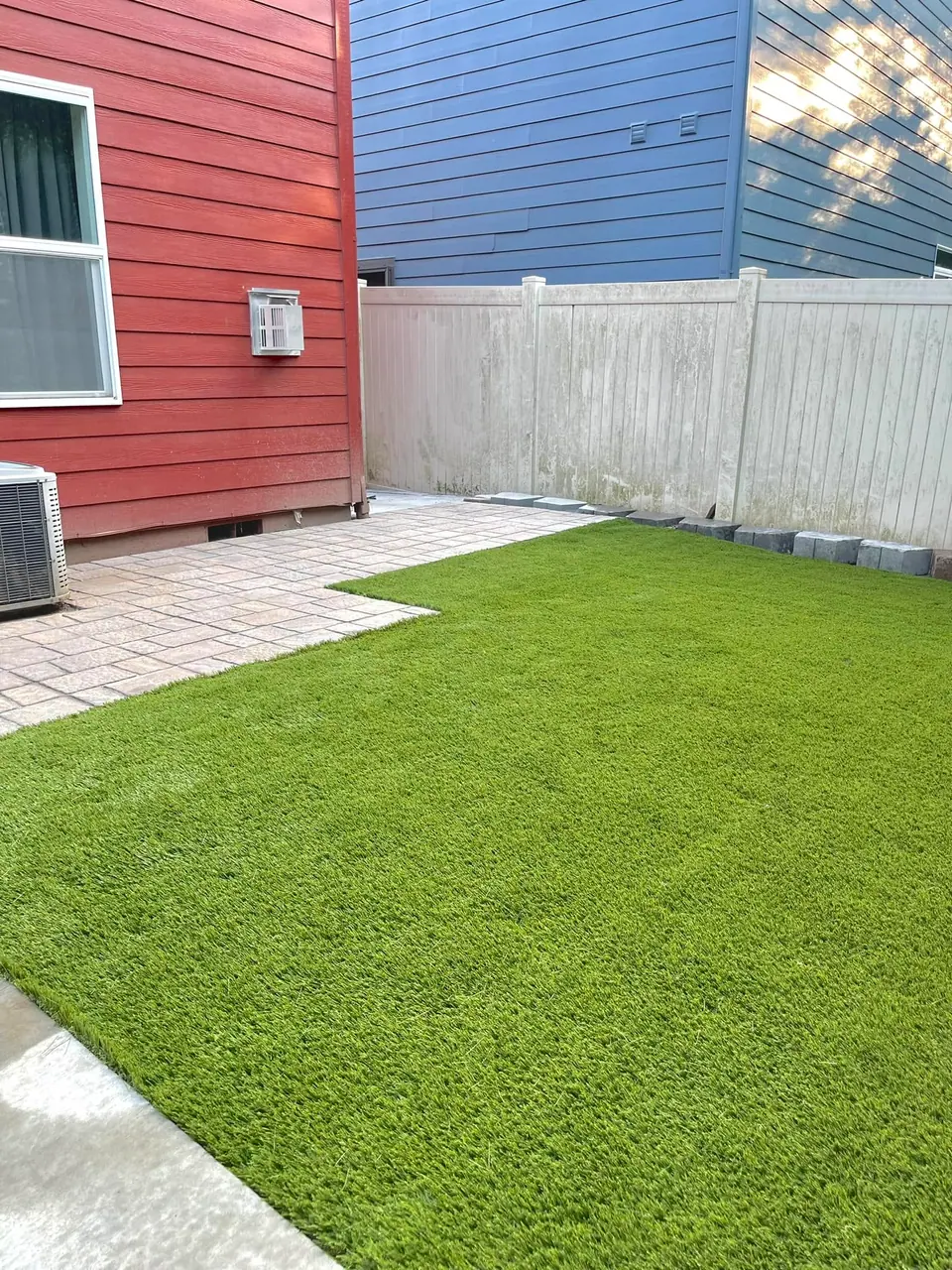
Artificial Turf Installation by city
Local conditions change what this job takes. Pick your area for the specifics.
Need artificial turf installation?
Free on-site estimates across Clark County. We walk the property with you, tell you what it actually needs, and put a fixed price in writing.
Artificial Turf Installation: common questions
Does artificial turf drain in Pacific Northwest rain?
Yes, when the base is built for it. The turf backing is perforated and the crushed rock base beneath it moves water vertically into the subgrade. The failures we see are installations laid over compacted clay with nowhere for water to go, which puddles and grows algae. Drainage is a base problem, not a turf problem.
How long does artificial turf last?
A quality turf on a properly built base generally gives 15 to 20 years of residential use. Most products carry a manufacturer warranty in the 8 to 15 year range against UV degradation and fiber loss.
Is it safe for dogs?
Yes. Solid waste is picked up as normal and urine drains through the backing into the base. We use an infill that resists odor rather than a sand infill that holds it, and periodic rinsing keeps a pet area fresh.
Does moss grow on artificial turf?
It can, in deep shade, if debris is allowed to build up in the fibers — which is a real consideration on our side of the mountains. Blowing leaves and needles off a couple of times a year prevents it. It is far less work than maintaining real grass in the same spot.
What goes under artificial turf?
A compacted crushed rock base built to drain vertically, with geotextile separating it from the subgrade, and the turf pinned and seamed over the top with infill brushed in. It is closer to building a patio than laying a carpet. Turf installed straight onto graded soil is the version that puddles, wrinkles and grows moss.
Does artificial turf get hot in summer?
In direct sun it does get warmer than living grass. Our summers are mild and short compared with the places turf gets a bad reputation for, so it is rarely a dealbreaker here, but a south-facing lawn in full August sun will be noticeably warm underfoot. Shade, lighter infill and a hose all take the edge off it.
How do you stop weeds coming through turf?
Weeds do not grow up through a correctly built turf system — the base and geotextile see to that. What does happen is seed blowing in and germinating in the infill on the surface, especially along edges and under trees. That pulls out by hand or treats easily; it is a housekeeping job, not a failure.
What maintenance does artificial turf actually need?
Cross-brushing to keep the blades upright in the traffic lanes, rinsing, clearing leaves and needles before they mat down, and topping up infill occasionally. Under conifers it needs more attention than the brochures suggest, because organic debris left to rot on the surface is what feeds moss.
Can you install turf on a slope?
Yes, and it often works better than grass on ground that is awkward to mow. The build changes: the base has to be terraced or keyed so it does not creep downhill, and anchoring and seam placement matter more. Steep banks that are miserable to mow are one of the better arguments for turf.
How does turf handle dog urine and smell?
Liquid drains straight through the perforated backing into the base, which is why drainage quality decides whether a dog lawn smells. We use an odour-controlling infill on pet installations and recommend rinsing the favoured spots. The installations that develop a smell are almost always the ones built over ground that does not drain.
Will my dog dig it up?
A determined digger can get an edge up, which is why edge detailing matters on a pet install — properly secured perimeters, tight seams and generous pinning. Once the edges are locked down, most dogs lose interest quickly because there is nothing to get a claw under.
Is artificial turf worth it in a climate this wet?
For the right yard, yes — and the wet is part of the argument. A real lawn in deep shade under Douglas fir, on ground that stays saturated from November to April, is a losing battle that ends in moss and mud every winter. Turf gives you a usable green surface in February. In an open, sunny yard with decent drainage, good sod is often the better buy.
How long does an installation take?
A typical residential lawn is two to four days: excavate the existing surface, build and compact the base, then lay, seam, pin and infill. Awkward access, heavy root removal or a slope that needs terracing adds time, as does hauling out the old lawn if there is a lot of it.
Can turf go right up to a patio, wall or planting bed?
Yes, and the transition is where a job looks either finished or homemade. Turf needs a clean, secured edge against hardscape and a proper border against beds so the infill stays put and the edge does not lift. We detail those junctions rather than tucking the turf under and hoping.
What happens where tree roots are in the way?
We work around significant roots rather than cutting through them, which sometimes means adjusting the base depth locally or reshaping the turf area. Cutting major roots to make a base fit risks the tree — and a failing mature tree costs more than the lawn did.
Can artificial turf be repaired if it is damaged?
Yes. A burn, tear or stained patch can be cut out and a section let in, seamed and infilled. As with pavers, keeping an offcut from the original roll is worth doing, because turf products change and colour and pile shift between production runs.
Do I need to worry about a fire pit or barbecue near turf?
Yes — synthetic fibre and embers do not mix, and a single ember makes a permanent mark. Keep fire features on hardscape with a sensible gap, and be careful with anything that reflects concentrated sun. It is the most common way we see turf damaged.
Does turf drain fast enough for our rainfall?
The turf backing and base handle our rainfall rate comfortably. The thing that determines whether the lawn is usable in February is what happens below the base — if the subgrade cannot take the water away, you have built a very well-drained surface on top of a bathtub. Which is why we look at where the water goes before we quote.
How does the cost compare with a real lawn?
Turf costs considerably more to install and almost nothing to run; sod is cheaper up front and carries mowing, water, feed and moss control for its whole life. Our long dry summer means a real lawn here needs genuine irrigation to stay green through August. Which one wins depends on how long you are staying and how much shade you have.