Landscape Design & Installation in Clark County, WA
Full yard design and installation — planting plans, beds, borders and mulch built around plants that actually thrive in zone 8b.
Get a Free EstimateWhether it is a bare new-construction lot or a tired yard that has not been touched in twenty years, the same principle applies: get the bones right — grade, drainage, hardscape, irrigation — and then plant into them. Planting first and fixing drainage later means digging up plants you paid for.
Designing for this climate
The 2023 USDA map puts Vancouver and Ridgefield in zone 8b — an average winter low of 15 to 20°F — with mild wet winters and a genuinely dry July through September. That combination kills a surprising number of plants chosen off a national garden centre tag: things wanting sharp winter drainage rot in ground that stays wet for seven months, and things wanting summer moisture fry in August without irrigation.
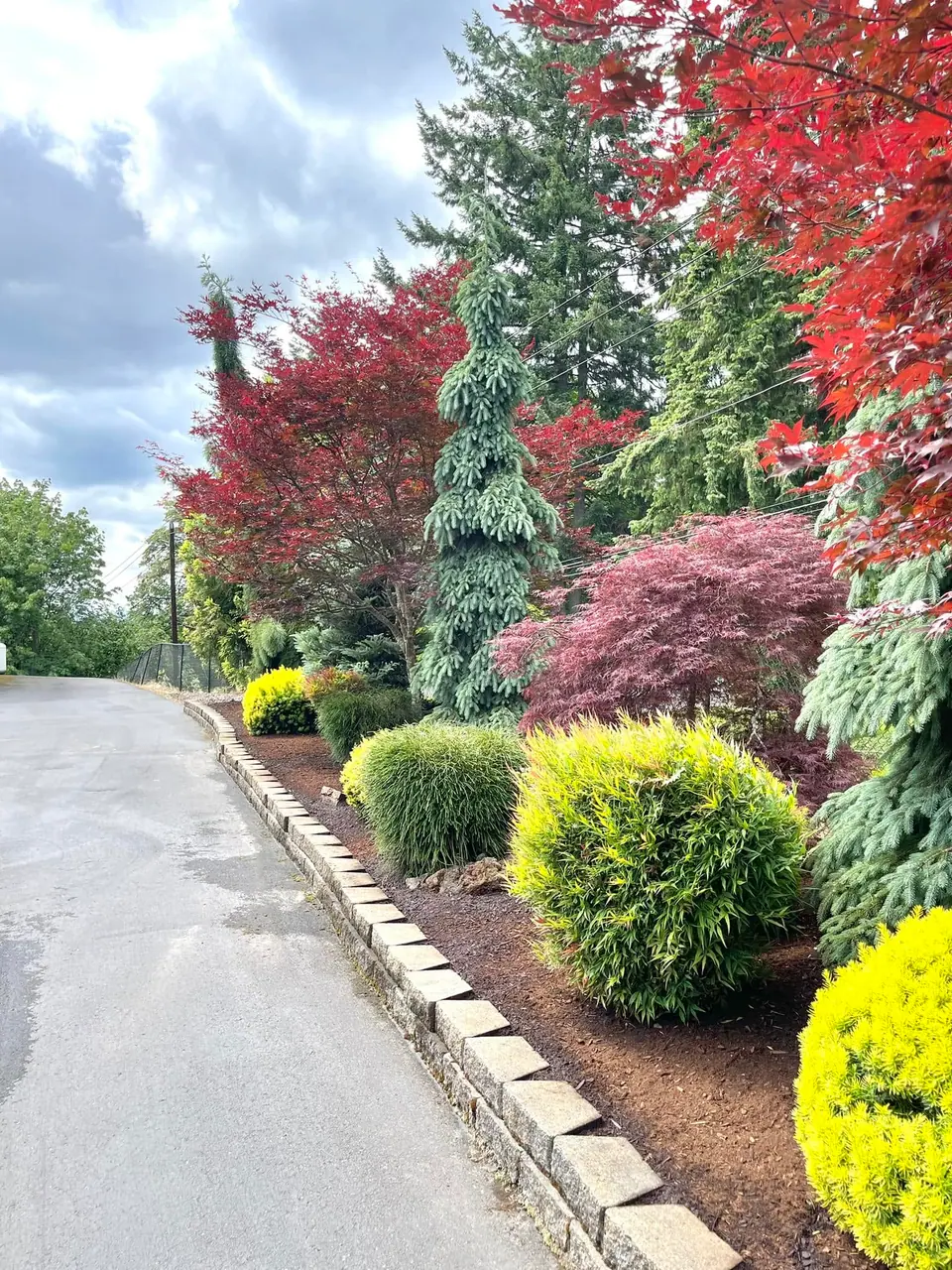
We plan around plants proven in the Pacific Northwest — Japanese maples, dogwoods, hydrangeas, ferns and hellebores for shade, and dwarf conifers, ornamental grasses, barberry, spirea and lavender in the sun. We plan for mature size, not nursery size, so you are not ripping out overgrown shrubs in six years because they were planted eighteen inches from the house.
What a full installation includes
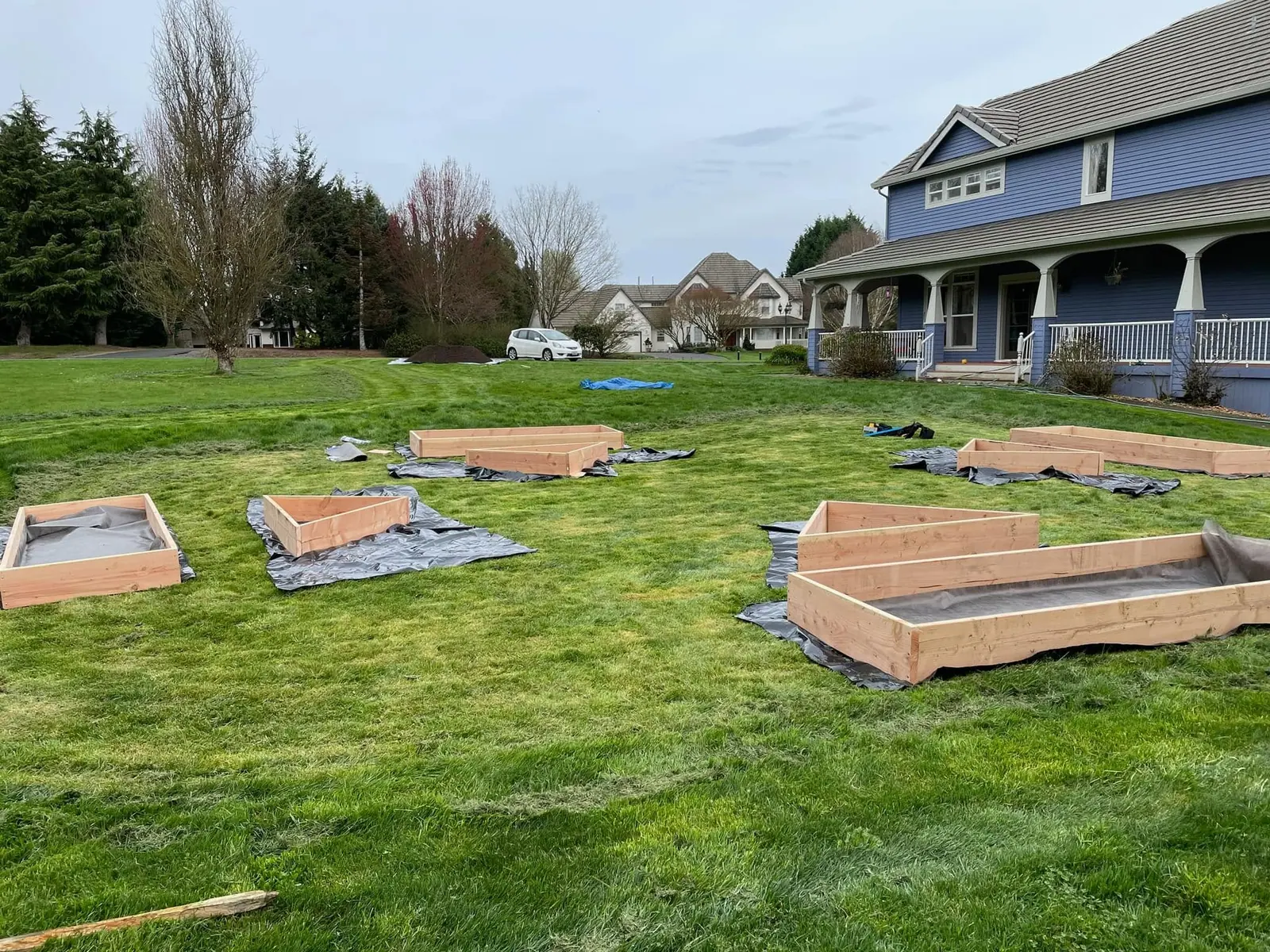
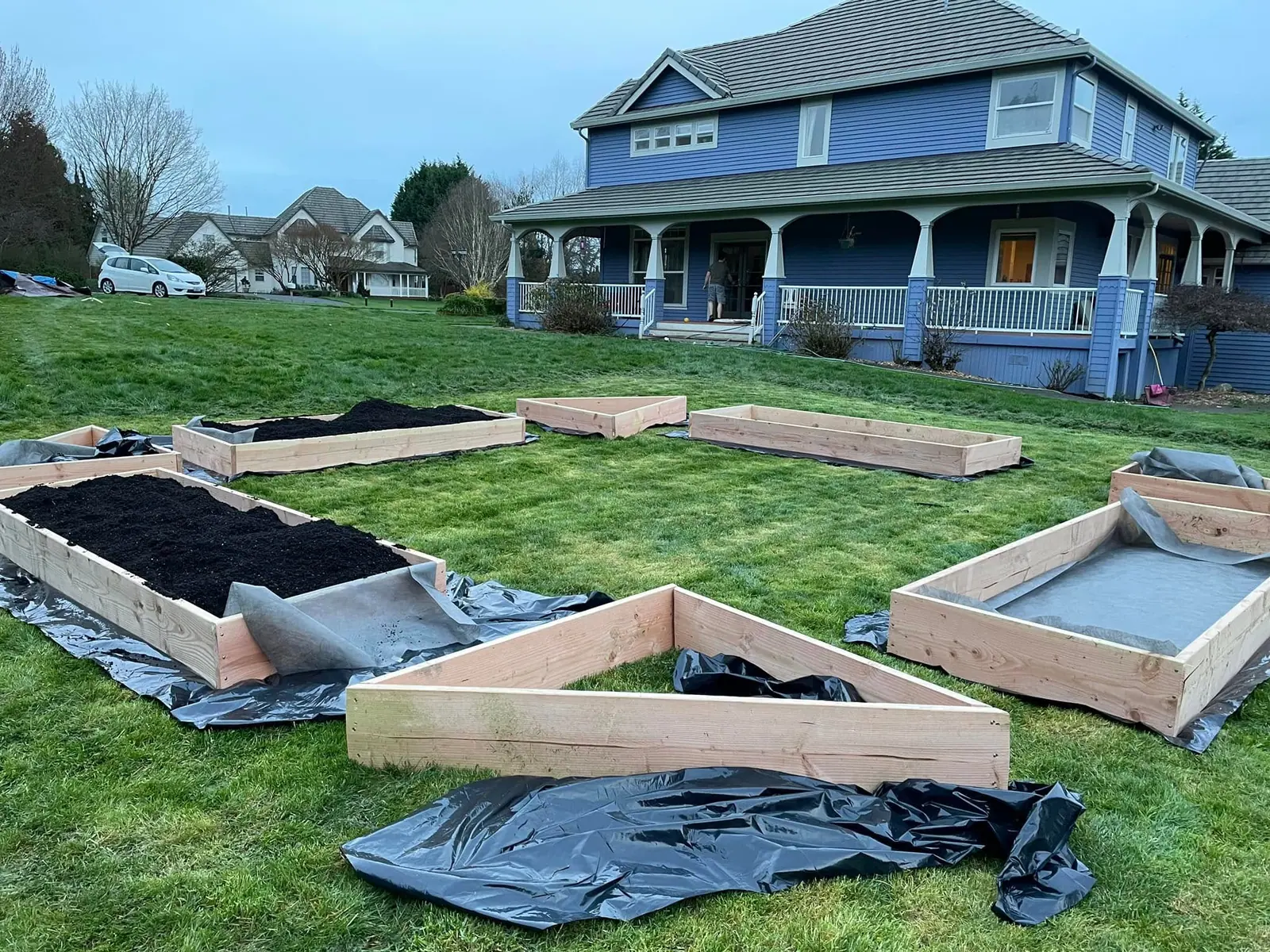
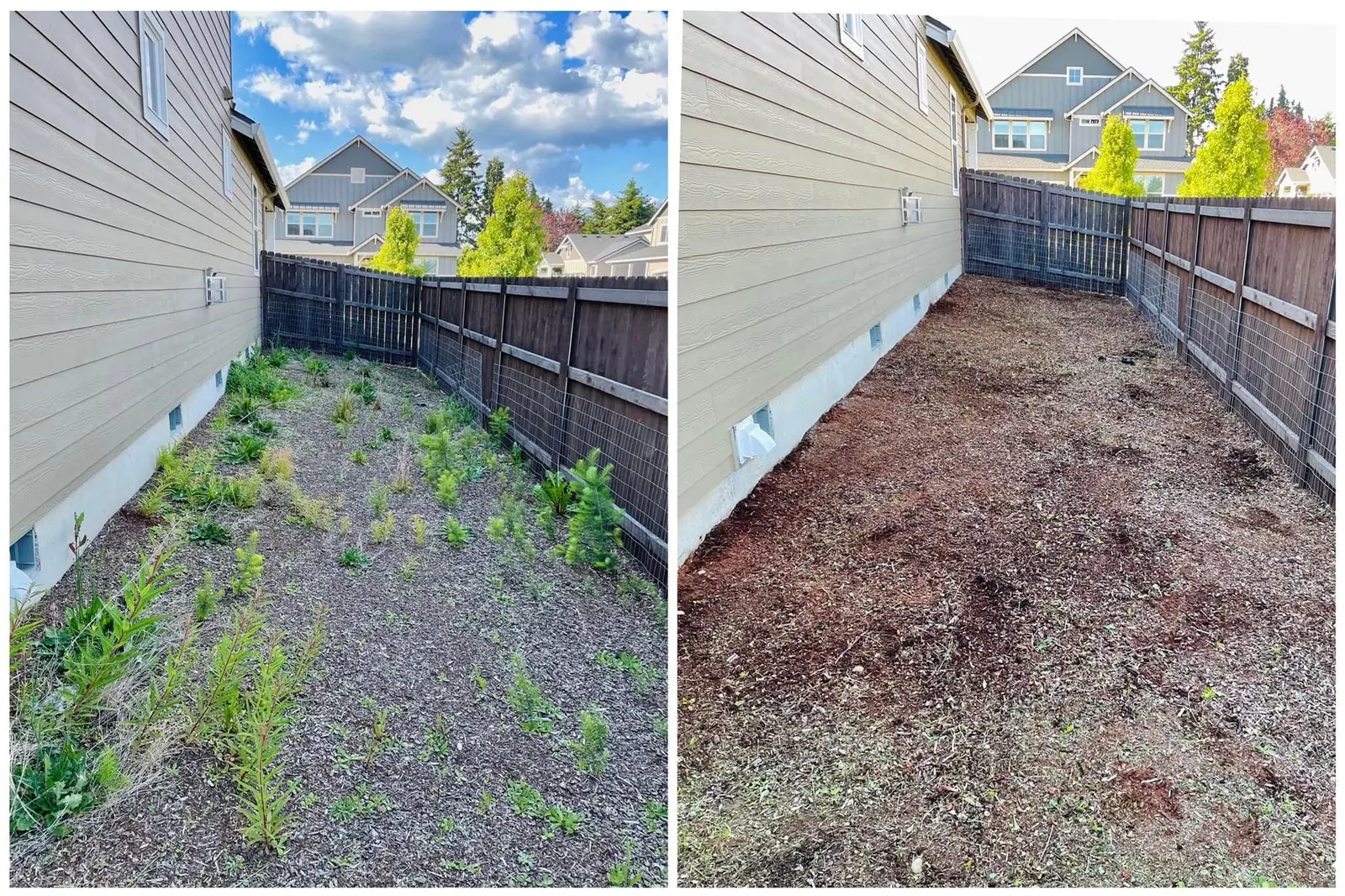
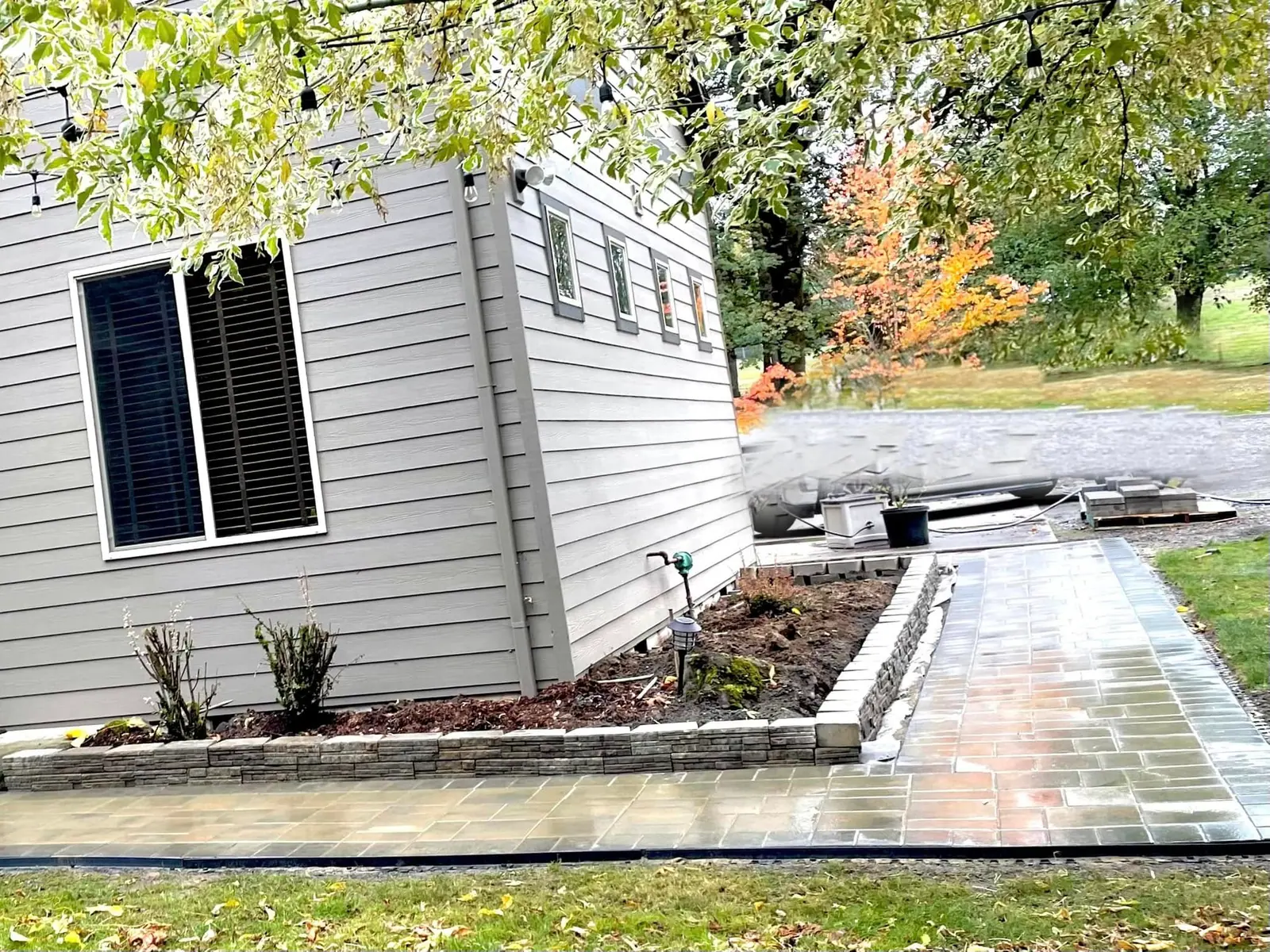
Grading and soil preparation, bed shaping and edging, planting with amended backfill, bark or rock mulch, and a plan for how each area gets watered. We coordinate the hardscape and the planting so the patio, the beds and the lawn all get built in the right order rather than fighting each other.
New construction yards
A new home in Ridgefield, Felida or Battle Ground usually comes with compacted subsoil, construction debris under a thin skin of topsoil, and downspouts discharging right at the foundation. We treat those as the starting problems. Builders are getting you a certificate of occupancy, not a landscape.
What is included
- Planting plans built around zone 8b performers
- Spaced for mature size, not nursery size
- Amended backfill in our native clay
- Shaped beds with clean, durable edging
- Bark or decorative rock mulch
- Hardscape and planting sequenced correctly
Every quote is fixed and in writing. We walk the site, tell you what the job actually needs, and price it. If we find something during the walkthrough that changes the scope, you hear it then — not as a change order halfway through.
Where these figures come from
- Plant Hardiness Zone Map (2023 revision)USDA Agricultural Research Service
- 1991–2020 Climate Normals, Vancouver Pearson FieldNOAA National Weather Service, Portland
Need landscape design & installation?
Free on-site estimates across Clark County. We walk the property with you, tell you what it actually needs, and put a fixed price in writing.
Landscape Design & Installation: common questions
Do you charge for landscape design?
Estimates and a straightforward planting layout for work we are installing come with the project. If you want a full drawn design package to shop around or to phase over several years, that is a separate paid service and we will quote it up front.
What plants do best in Clark County?
For shade: Japanese maple, hydrangea, sword fern, hellebore, rhododendron and azalea. For sun: dwarf conifers, ornamental grasses, spirea, barberry, lavender and rosemary. The bigger factor than the plant list is drainage — most plant failures in our clay are root rot from winter wet, not cold damage.
Can we phase the project?
Yes, and for larger yards we often recommend it. We sequence it so the messy structural work — grading, drainage, walls, irrigation sleeves under future patios — happens first, and the phases that follow do not require tearing up what came before.
Bark or rock mulch?
Bark holds moisture, moderates soil temperature and breaks down into the soil, which is better for planting beds — but it needs topping up every two to three years. Rock lasts effectively forever and suits low-water beds and areas along a foundation, but it reflects heat and makes future planting changes harder. Many of our yards use both, in different zones.
What order should the work happen in?
Grade and drainage, then irrigation sleeves and hardscape, then soil, then planting, then mulch. It sounds obvious and it is routinely done backwards. Planting a bed before the drainage is fixed means digging up established plants a year later, and running a patio base through a finished lawn means rebuilding the lawn.
How much of the yard should be planting versus hardscape?
It depends how you use it, but a common mistake here is too much lawn and too little of anything else, which leaves you mowing ground nobody walks on and watering it through August. Beds, paths, a patio and some structure usually give you more usable outdoor space and less upkeep than an unbroken sheet of grass.
What is low maintenance, realistically?
Low maintenance is not no maintenance. It means right plant, right place, generous beds so things are not fighting, mulch to suppress weeds and hold summer moisture, and irrigation where it is needed. Beds packed with plants that will outgrow the space in three years is high maintenance dressed up as a design.
When is the best time to plant here?
Autumn, comfortably. Planting in October or November gives roots the entire wet season to establish before they have to face a dry summer, and it dramatically reduces how much watering you have to do. Spring works. Summer planting is possible but commits you to keeping everything alive by hand through the driest stretch.
Do you plant natives?
Where they suit the spot, yes — and there are excellent Pacific Northwest natives for the shaded, damp conditions a lot of local yards have. Native does not automatically mean carefree, though. A plant native to a shaded stream bank will struggle in a hot, dry, south-facing bed just as much as anything else.
Will deer eat what you plant?
In the rural parts of the county — out toward Hockinson, Brush Prairie, La Center and the edges of Ridgefield — deer pressure is real and it shapes the plant list. No plant is genuinely deer-proof when the animals are hungry, but there are plenty they leave alone. Tell us at the walkthrough if you see them, because it changes what we spec.
How big will the plants be when you install them?
A mix, deliberately. A few larger specimens give the design immediate structure; the rest go in at a size that establishes well and catches up quickly. Planting everything at full size costs a great deal and the plants often establish more slowly than smaller stock beside them.
How long until the planting looks established?
The old rule holds up here — first year it sleeps, second year it creeps, third year it leaps. Expect visible gaps in year one, because a bed that looks full on planting day is a bed that will be overcrowded by year three. Mulch and sensible spacing are what get you through the awkward stage.
How much mulch do beds need and how often?
A few inches, kept back off plant stems and tree trunks rather than piled against them. Bark breaks down and feeds the soil, so it needs topping up every couple of years. That breakdown is a feature, not a fault — it is the main reason we usually prefer it to rock in planting beds.
Do I need irrigation, or can I water by hand?
You can hand water a small, well-mulched, sensibly planted garden through our summer. You cannot realistically hand water a large new landscape through July, August and September, and the plants that die are always the ones at the end of the hose. Irrigation is cheapest to install before the beds and hardscape go in.
Can you work from a design somebody else drew?
Yes, and we are happy to. We will read it properly and tell you if anything in it fights the site — plants specified for drainage the ground does not have, or hardscape drawn across the route the water actually takes. We would rather raise that at the start than build it and watch it fail.
What about privacy screening from the neighbours?
Very common request, especially on newer lots where houses sit close together. The trick is choosing evergreens that reach the height you want and then stop, rather than something that screens beautifully for six years and then becomes a forty-foot problem overhanging a fence. Mature size is the first thing we ask about.
Can you plant around an existing mature tree?
Carefully, and with respect for the root zone. Piling soil over roots or trenching through them to install a bed is a slow way to kill a tree that took forty years to grow. There is usually a way to get a good bed in there — it just needs planning rather than a machine.
What happens to the plants over our winter?
We are in zone 8b, with average winter lows around 15 to 20°F, so hardiness is rarely the limiting factor. Wet is. Plants that need sharp winter drainage sit in saturated ground from October to May and rot, which is why so many things that look fine on a nursery label fail here. We select for that.
Do you guarantee the plants?
Nursery stock usually carries the supplier’s own terms, and we will tell you what applies to what we install. What we can genuinely control is putting the right plant in the right place, in prepared soil, with a route to water — which is what actually determines whether it lives. Anything relying on the homeowner watering it through August we will be plain about.