Grading & Excavation in Clark County, WA
Site grading, land clearing, gravel driveways and lot prep with machines sized for residential access.
Get a Free EstimateGrade is the foundation of everything else in a landscape. Get it wrong and no amount of drainage pipe, sod or hardscape downstream will fix it.
What we do
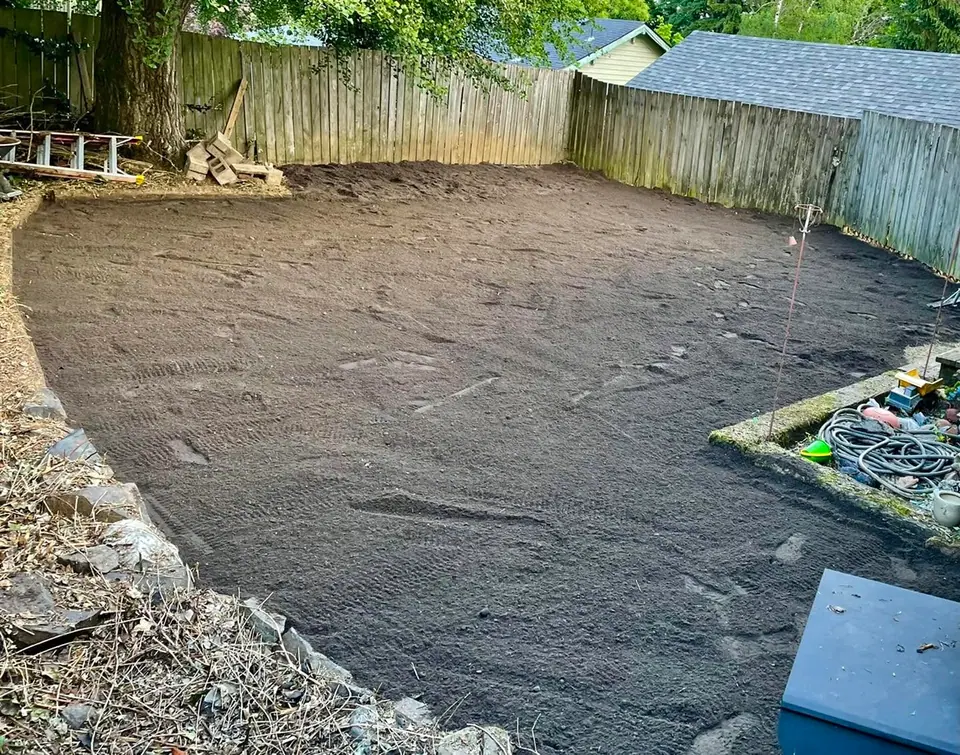
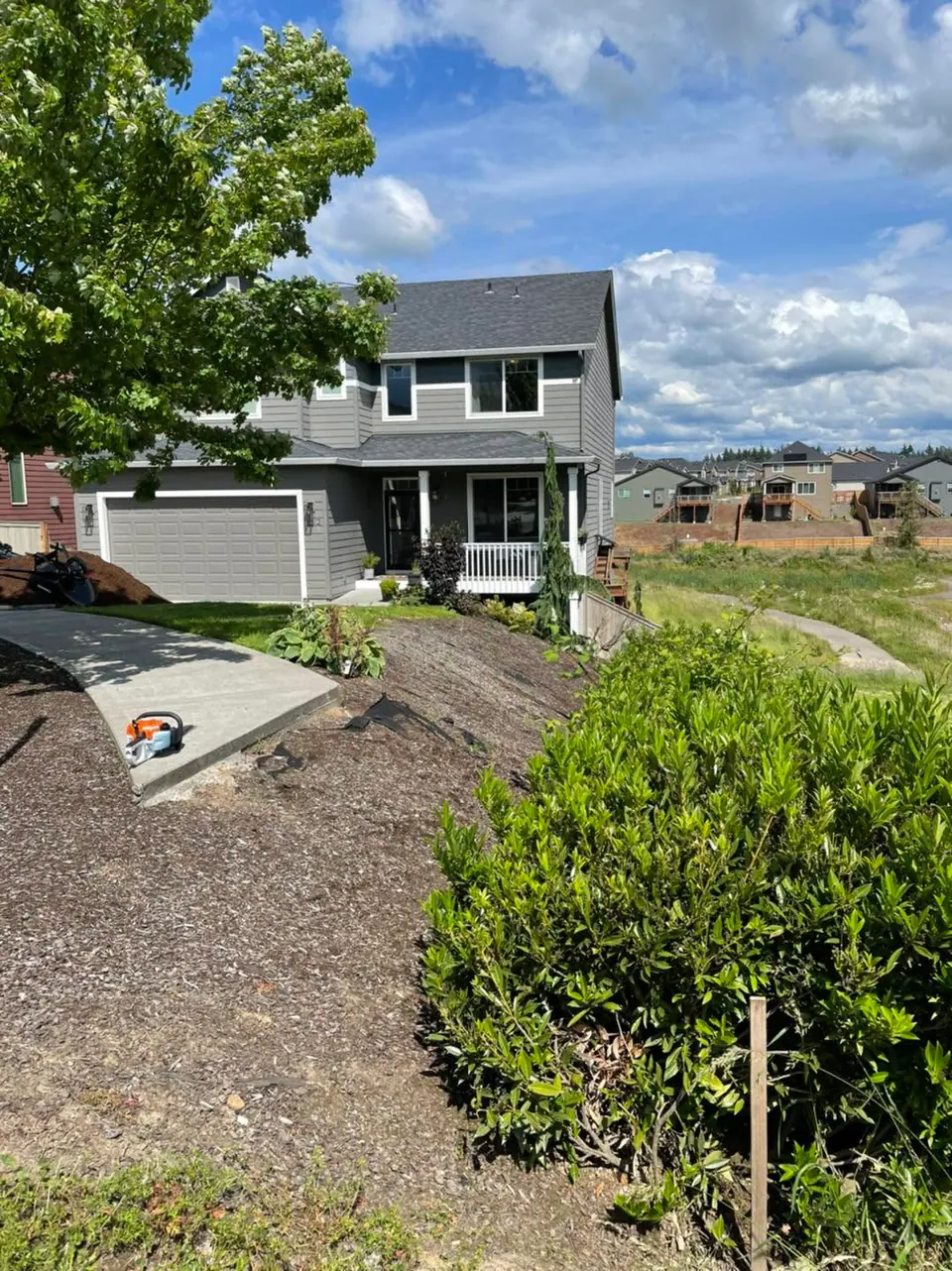
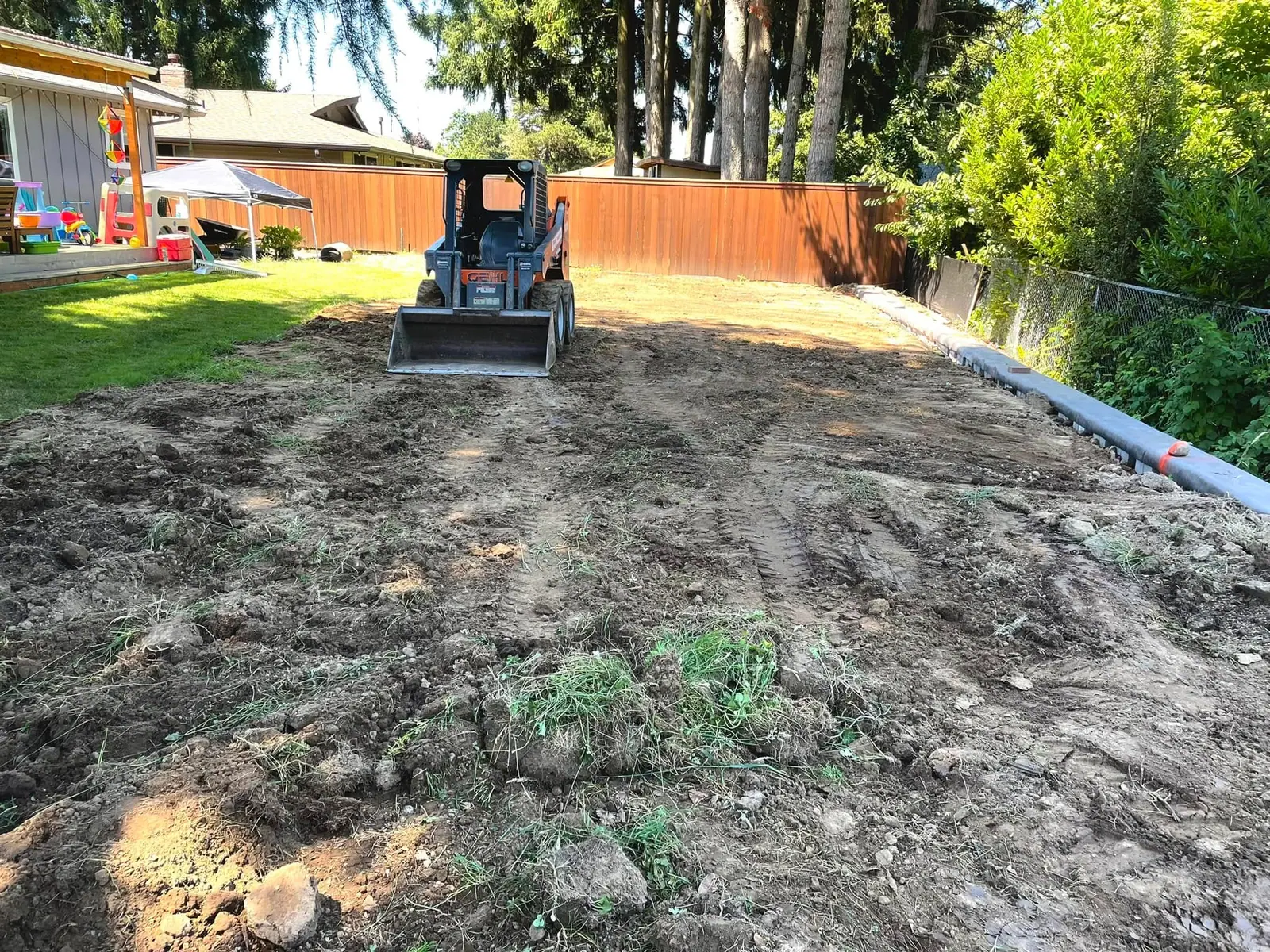
Rough and finish grading, land clearing and brush removal, stump and debris haul-off, lot preparation for new construction, gravel driveway and parking pad construction, and cut-and-fill to make a usable flat area out of a sloped yard.
We run equipment sized for residential lots and gated side yards, which matters more than raw machine capacity — a large excavator that cannot reach your back yard is no use to you.
Gravel driveways that hold up
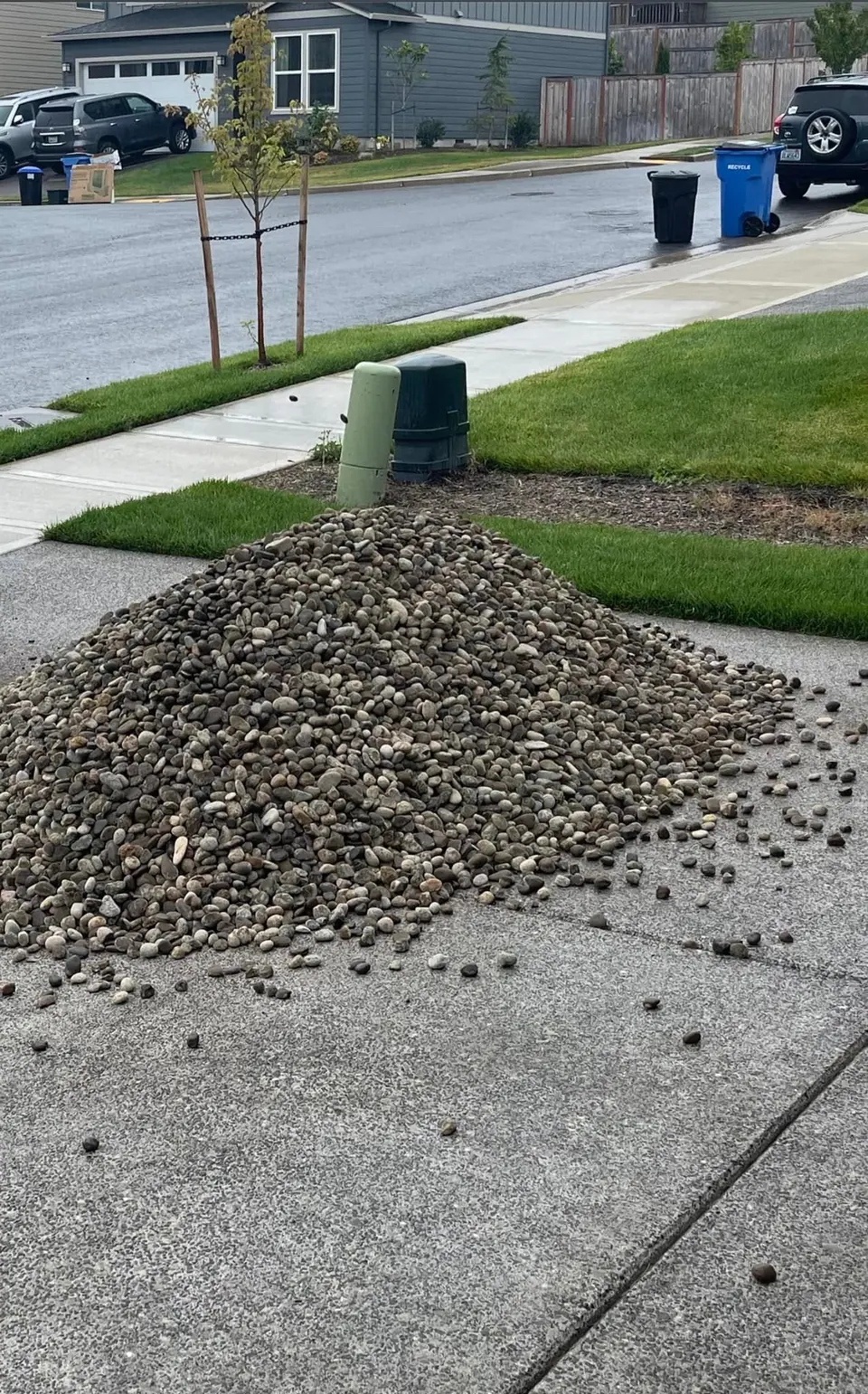
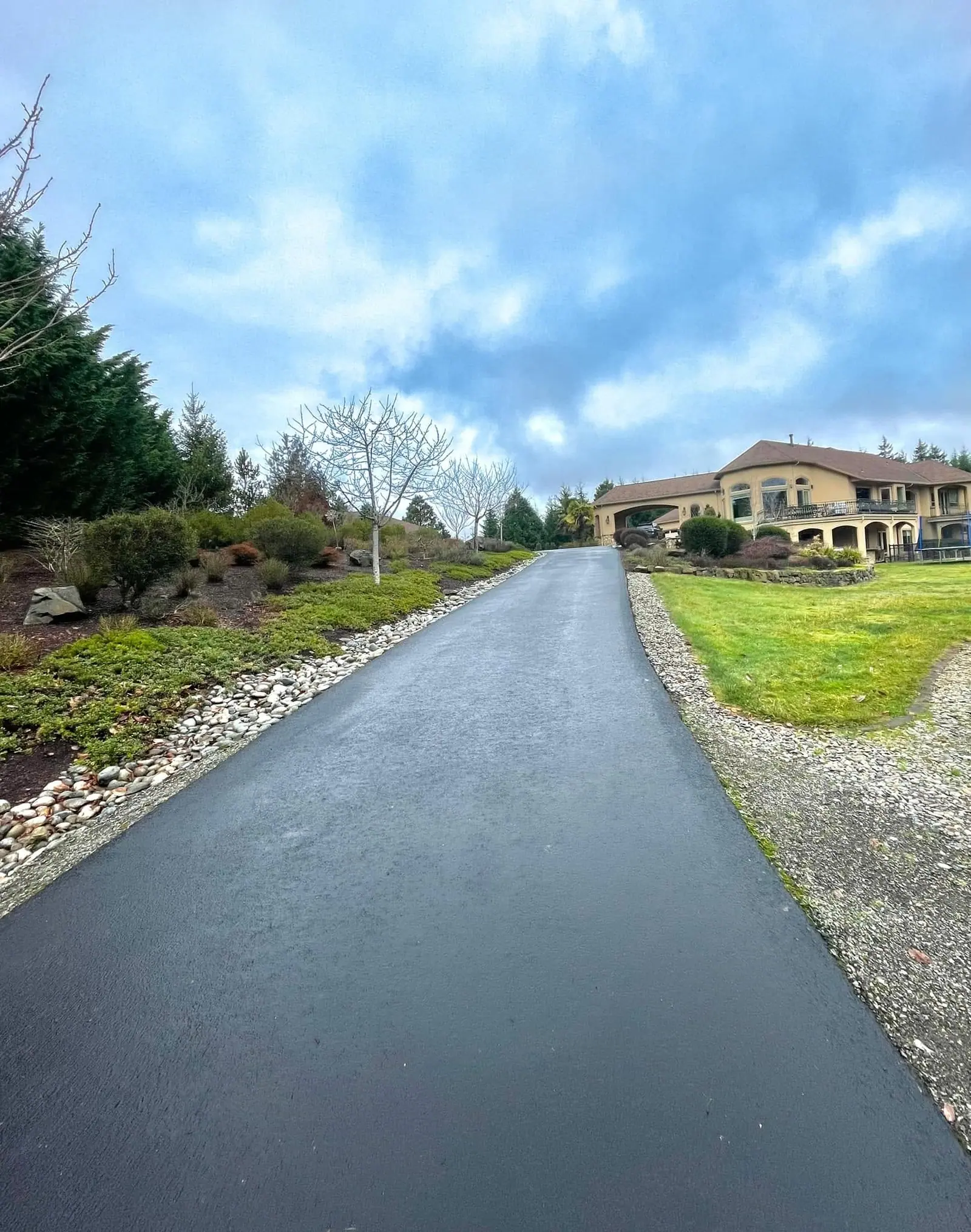
A gravel drive that potholes and rutted out was built as a single layer of decorative rock on soft ground. A durable one is built like a road: geotextile over the subgrade, a compacted structural base course of crushed rock, and a top course sized for the traffic. On our clay, the fabric layer is what stops the rock from slowly disappearing into the mud.
What is included
- Rough and finish grading
- Land clearing and brush removal
- Stump, debris and spoils haul-off
- New construction lot preparation
- Geotextile-separated gravel driveways
- Equipment sized for residential access
Every quote is fixed and in writing. We walk the site, tell you what the job actually needs, and price it. If we find something during the walkthrough that changes the scope, you hear it then — not as a change order halfway through.
Need grading & excavation?
Free on-site estimates across Clark County. We walk the property with you, tell you what it actually needs, and put a fixed price in writing.
Grading & Excavation: common questions
Do I need a permit to grade my yard?
Small residential grading is usually exempt, but Clark County and its cities set thresholds based on volume of material moved, slope steepness, and proximity to critical areas, streams and steep-slope hazard zones. Larger cut-and-fill jobs frequently do need a permit. We will flag it during the walkthrough.
Can you get equipment into my back yard?
Usually. We run compact equipment that fits through most side yard gates. If access is genuinely impossible we will tell you before quoting, because hand-digging changes the price substantially and you deserve to know that up front rather than as a change order.
What do you do with the dirt you dig out?
We haul it off and dispose of it properly, and that cost is included in the written quote. If you want spoils kept on site to build up a berm or fill a low area, we can do that instead and it usually saves money.
What is the difference between grading and excavation?
Excavation is removing material — digging out for a footing, a pond, a base or a trench. Grading is shaping the surface so it sits at the levels and falls you want, usually so that water goes where you intend. Most projects need both, and the grading is the part that quietly decides whether everything else works.
What is rough grading versus finish grading?
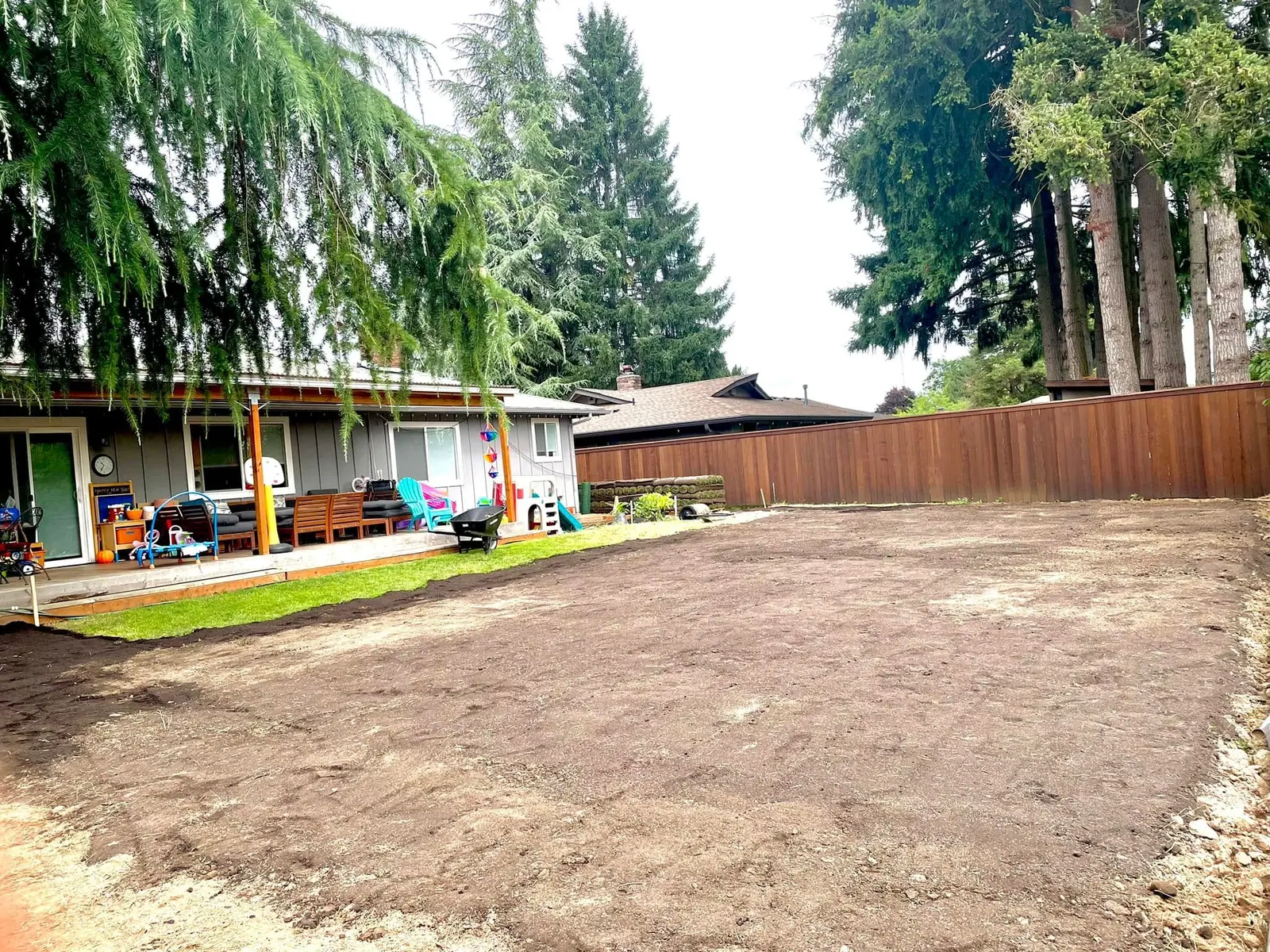
Rough grading gets the site to approximately the right shape and levels, usually with a machine. Finish grading is the final pass that sets the actual surface — the fall on a lawn, the levels around a patio, the tie-in to a driveway — and it is done with far more precision. Skipping properly done finish grading is why some new lawns hold water.
How much fall does a yard need away from the house?
A definite, continuous slope away from the foundation for the first several feet, then wherever the site allows the water to go. This is the single most common defect we find on both older houses and new-build lots — ground that has settled flat or slopes back toward the wall, delivering roof and surface water straight to the foundation.
Why is my new-construction lot so hard to work with?
Because the topsoil usually left during the build and what remains is subsoil compacted by heavy machinery. It sheds water rather than absorbing it, roots struggle to get into it, and it is often graded to shed water off the building rather than to work as a yard. Almost every new lot we take on starts with decompaction and grading.
What is compaction and why does it matter so much?
It is how densely the soil particles are packed. Compacted ground will not let water through and will not let roots in, which is why lawns fail and yards puddle on lots that were driven over during construction. Under hardscape you want deliberate, controlled compaction; under lawns and beds you want it relieved. The mistake is treating the whole yard the same.
Can you fix a yard that slopes toward the house?
Usually yes, and it is one of the highest-value jobs we do. Depending on the site it means regrading to create fall away from the building, cutting a swale to intercept water arriving from uphill, or a combination with piped drainage. The fix is worth doing properly, because everything downstream of it — crawl space, foundation, patio — depends on it.
What is a swale?
A shallow, deliberately shaped channel that collects surface water and carries it somewhere useful, usually grassed over so it looks like part of the lawn. Where the site has somewhere for water to go, a well-cut swale can solve a wet yard with no pipe at all, and it needs no maintenance beyond mowing.
How much access do you need for machinery?
It depends on the machine, and it is one of the biggest cost variables on an excavation job. Gate width, side-yard clearance, overhead branches and wires, and whether we can cross a lawn or driveway all decide what we can get in. Where nothing fits, work goes to hand digging, which changes both timeline and price considerably.
Will heavy machinery damage my lawn or driveway?
Tracked machines spread load better than wheels, and we use mats and plywood on routes that matter, but on saturated winter ground some rutting is realistic on the access route. We tell you where the machine has to travel and what we expect to reinstate before we start rather than after.
Do you locate buried utilities before digging?
Utility locates come first, every time. Public utilities get marked through the locate service; private lines — irrigation, low-voltage lighting, a gas run to a fire pit, a septic drainfield — are frequently not on any record, so what you can tell us about your own property genuinely matters. Anything you know about, tell us.
Can you work around a septic system or drainfield?
Yes, and we need to know exactly where it is first. A drainfield does not want machinery over it, spoil stacked on it, or anything built across it, and damaging one is a very expensive mistake. On rural properties around La Center, Hockinson and Brush Prairie this comes up regularly.
Can you bring in fill, not just take material away?
Yes. Importing structural fill or topsoil is routine — raising a low area, building up to a level, or replacing subsoil with something that will actually grow. What matters is using the right material for the job and compacting imported fill in lifts, because loose fill settles and takes whatever you built on it with it.
How does the wet season affect excavation?
Saturated soil is heavier, messier and cannot be compacted properly, so some operations genuinely have to wait for it to drain. Excavation and drainage work carry on through winter; large-scale fill and compaction sometimes cannot. We would rather tell you a job is better in April than compact fill in February and have it settle.
Do you handle rock or old concrete in the ground?
Regularly. Buried concrete, old footings, previous fence post bases and demolition debris turn up constantly in yards that have been worked on before. It is one of the genuine unknowns on any excavation, and where we think there is a real risk of it we say so at the walkthrough rather than presenting it as a surprise later.
How do you protect trees during excavation?
By staying out of the root zone as much as the design allows, avoiding trenching straight through major roots, and keeping machinery from compacting the ground under the canopy. A mature tree that gets its roots cut or its root zone compacted often dies slowly enough that nobody connects it to the work three years earlier.