Flagstone & Stepping Stone Paths in Clark County, WA
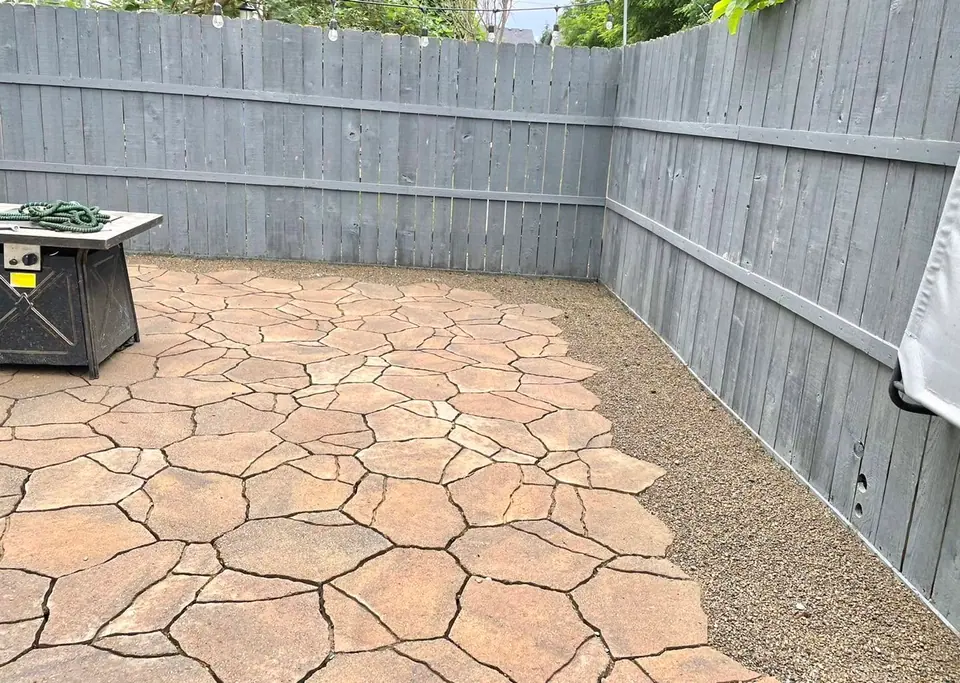
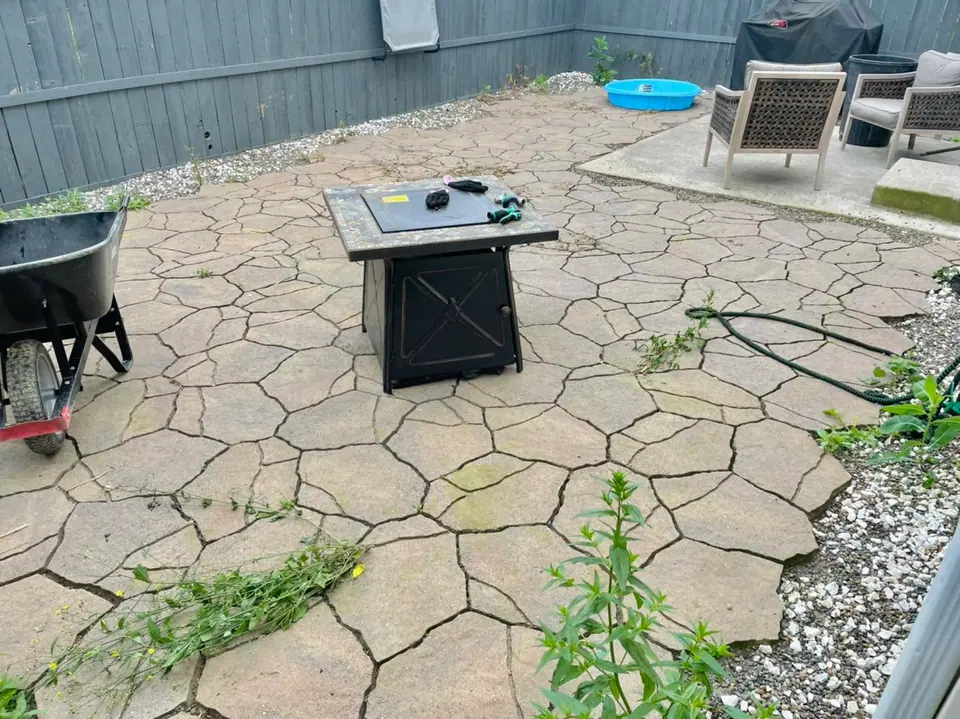
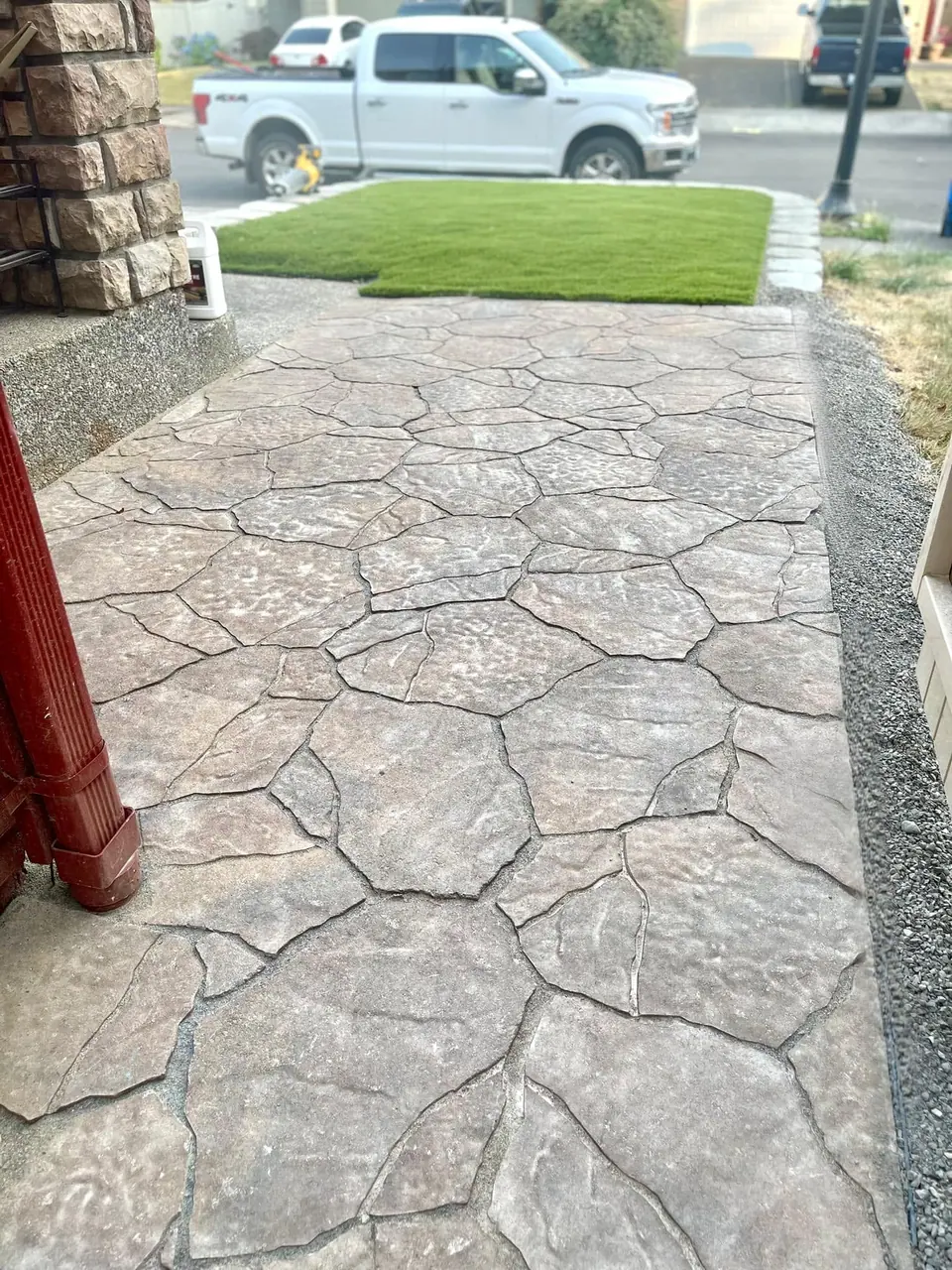
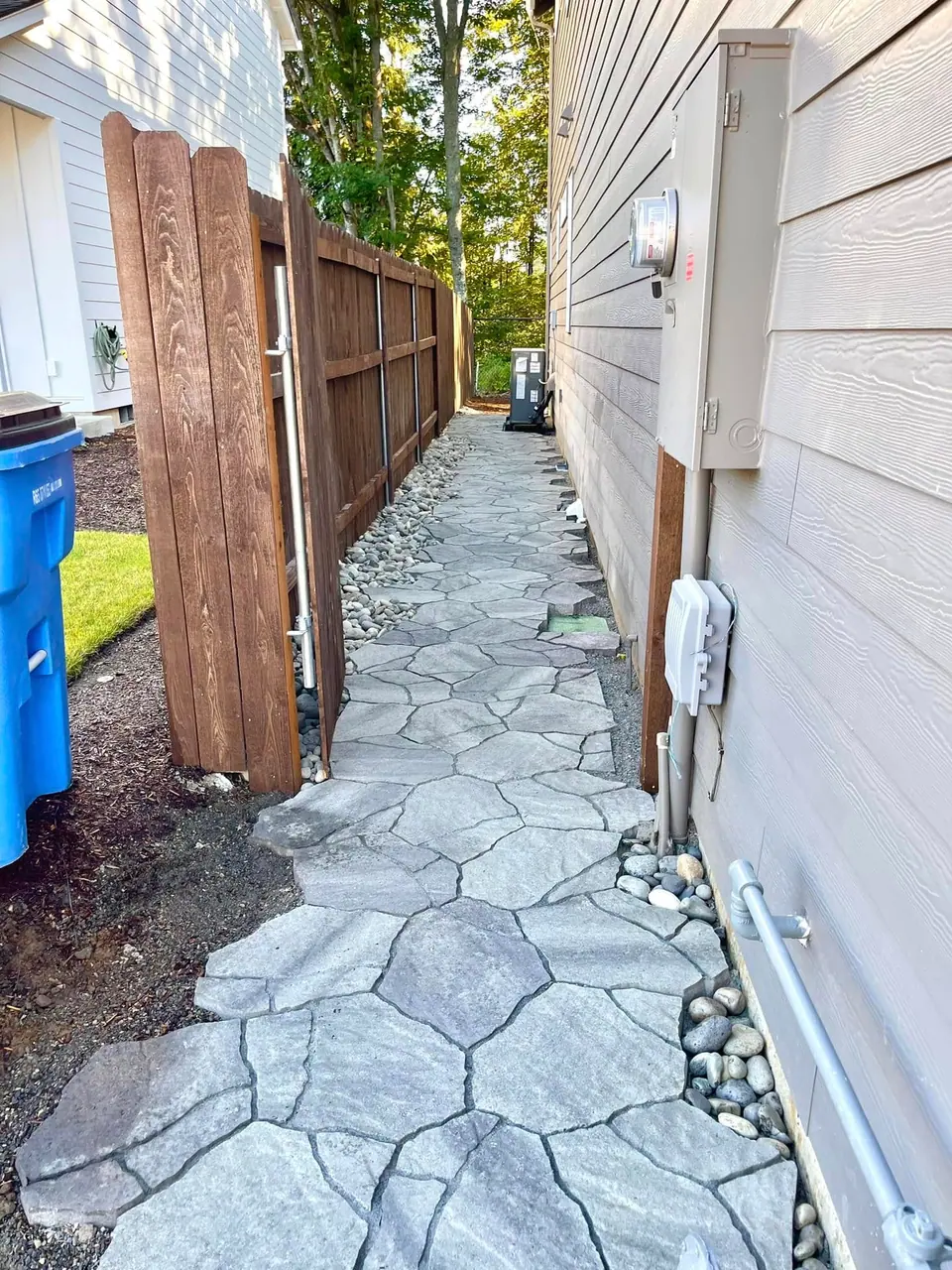
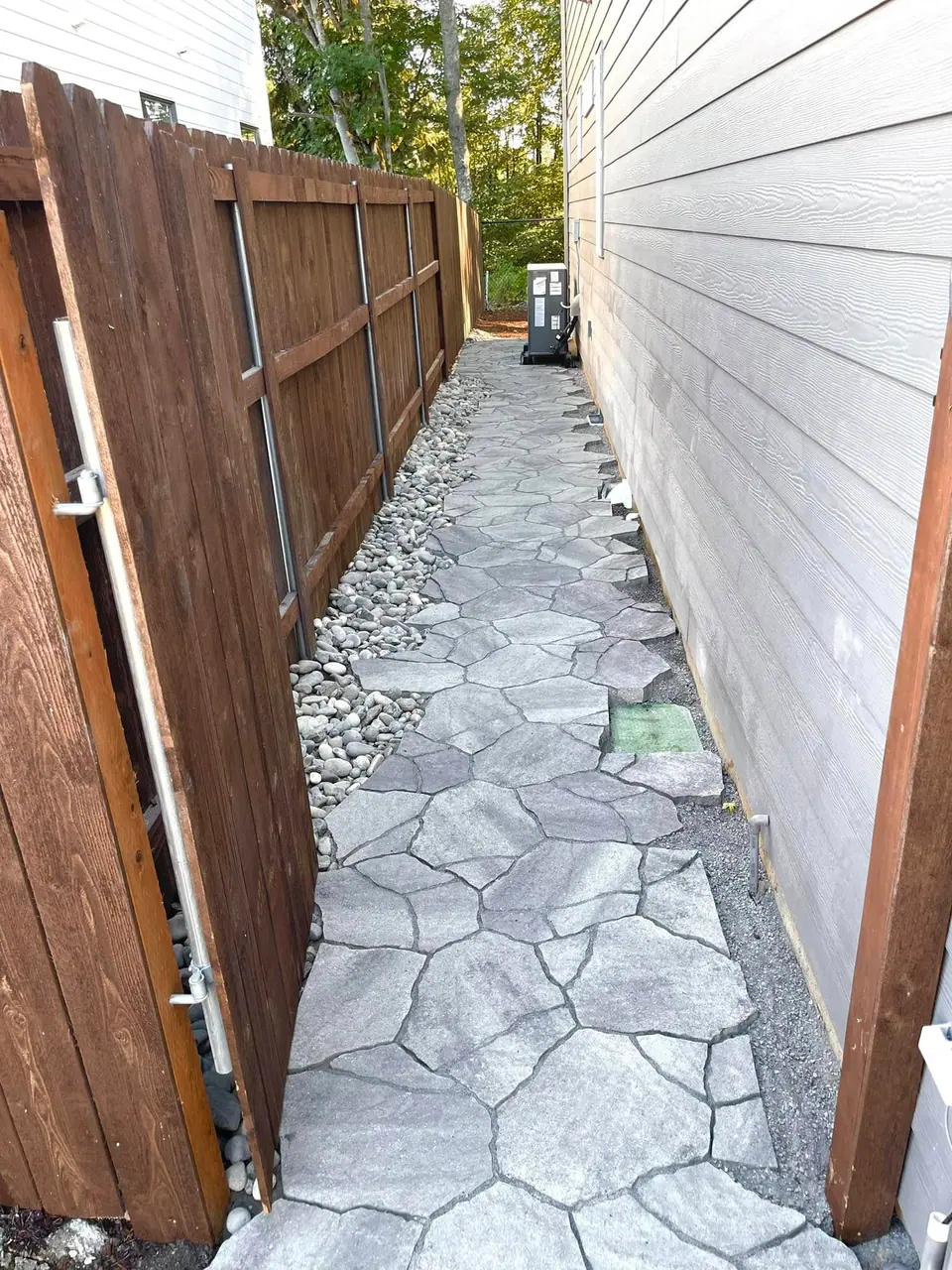
Natural flagstone patios and stepping stone paths set in gravel, sand or mortar for a softer, less formal look.
Get a Free EstimateFlagstone reads more relaxed and organic than a machine-cut paver field. It is the right choice for garden paths, side yards and patios where you want the hardscape to recede into the planting rather than dominate it.
Set it on a real base
Even a casual-looking stepping stone path needs a compacted base under each stone, or the stones rock underfoot and sink unevenly through the first wet winter. We excavate, compact, and bed each piece individually so it sits solid and level with its neighbors.
Joints get filled with gravel, decomposed granite, polymeric sand or planted with a low groundcover, depending on the look you want and whether the surface needs to take furniture.
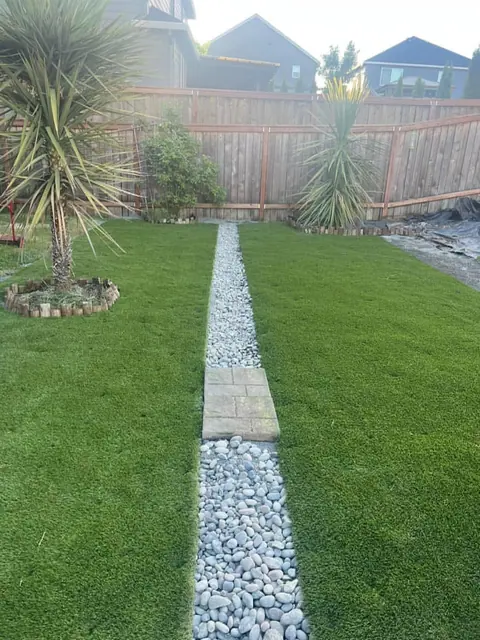
Stepping stones in river rock
One of the most useful details we install in Clark County: concrete or stone pads set into a river rock strip along a side yard. It gives you a clean dry walking surface, it lets the strip drain freely instead of holding a mud track, and it needs no maintenance. We build a lot of these along narrow side yards where nothing will grow.
What is included
- Compacted base under every stone
- Individually bedded and levelled pieces
- Gravel, sand or planted joints
- River rock strips for wet side yards
- Blended into surrounding planting beds
Every quote is fixed and in writing. We walk the site, tell you what the job actually needs, and price it. If we find something during the walkthrough that changes the scope, you hear it then — not as a change order halfway through.
Need flagstone & stepping stone paths?
Free on-site estimates across Clark County. We walk the property with you, tell you what it actually needs, and put a fixed price in writing.
Flagstone & Stepping Stone Paths: common questions
Is flagstone slippery in the rain?
It depends on the stone. Cleft-surface stone such as bluestone or quartzite has natural grip and performs well in our wet season. Smooth or polished stone and heavily sealed surfaces can be genuinely hazardous on any slope. We steer you toward a textured stone for anything with fall to it.
How far apart should stepping stones be?
Center to center, roughly the length of a comfortable stride — about 24 inches for most people. The right test is walking the layout before anything is set, which we do with you on site.
Flagstone or pavers?
Flagstone for a natural, informal look and garden settings; it costs more per square foot because every piece is fitted by hand. Pavers for uniform lines, larger areas, tighter budgets and anywhere furniture needs to sit dead flat.
What is the difference between dry-laid and mortared flagstone?
Dry-laid sits on a compacted base with jointing material between the stones and can flex slightly with the ground. Mortared flagstone is bedded on a concrete slab and grouted solid. Dry-laid is more forgiving on ground that moves seasonally and far easier to lift and reset; mortared gives a firmer, more formal surface but cracks where the slab beneath it does.
What can grow between the stones?
Low creeping plants make a flagstone path look properly settled — thyme, Irish moss and similar low growers all work here, given light. In deep shade they struggle, and gravel or stone dust joints are the more honest choice. Anything planted in joints needs the base to still drain underneath it.
How thick should flagstone be for a walkway?
Thicker than most people expect for a dry-laid path that carries real foot traffic, because thin stone snaps when the bedding under it is not perfect. Thin flagstone is fine mortared onto a slab where it is fully supported. Choosing thin stone for a dry-laid path is a common way to end up with broken pieces in year two.
What stone do you use around here?
Basalt is local and very much at home in a Pacific Northwest garden; bluestone and quartzite are common for their cleft, grippy surface. We steer toward textured stone rather than smooth for anything sloped or shaded, because our surfaces stay damp for a large part of the year.
Will stepping stones sink into the lawn?
They will if they are simply pressed into soil, which is how most of them get laid. Set on a small compacted base pocket and seated at or just below mower height, they stay put and you can run a mower straight over them. Sinking stones are a base problem, exactly like a sinking patio.
How do I keep moss off flagstone?
Accept some of it, honestly — a little moss on stone in a Northwest garden looks right and plenty of people plant it deliberately. Where it is a slip risk, on steps and slopes, it brushes off and can be treated. Improving light and airflow does more long term than repeated cleaning.
Can flagstone be used for a patio and not just a path?
Yes, and it gives a softer, more organic surface than a paver field. It takes more skill and time to lay, because natural stone varies in thickness and shape and every piece has to be fitted and bedded individually. That labour is the main reason it costs more per square foot than pavers.
How far apart do you space stones on a slope?
Closer than on the flat, and set into the slope rather than perched on it, so each stone gives a level footing. On anything steeper it usually stops being a stepping stone path and becomes steps, which is a different and safer build. We would rather build steps than a path people are careful on.
Can you build steps out of natural stone?
Yes — cut slab treads and boulder steps both work well and look far better than concrete in a garden setting. They need consistent riser heights and a solid, drained base underneath, because a stone step that settles unevenly is a genuine trip hazard rather than a cosmetic problem.
Does a flagstone path need edging?
Dry-laid paths hold their shape much better with a defined edge, whether that is a steel edge, a stone border, or a well-cut bed line. Without one, the jointing material migrates into the beds and the lawn creeps in from both sides until the path narrows.
Can flagstone go over an existing concrete path?
Where the concrete is sound and level, yes — mortared stone over an existing slab is a good way to dress up serviceable but ugly concrete. Where the slab is cracked or has moved, the stone will follow it, so the base has to be dealt with first.
How wide should a garden path be?
Wide enough for the way it is used. A single-file route through planting can be narrow; a path between a driveway and a front door, or one two people walk along together, needs to be considerably wider. Paths built too narrow are the most common regret, and widening a finished path is not a small job.
How much maintenance does dry-laid flagstone need?
Topping up joint material occasionally, resetting the odd stone that settles, and clearing leaf litter before it composts into the joints. That is genuinely most of it. It compares well with a mortared surface, where a cracked joint means grinding out grout rather than sweeping in sand.
Can you repair a flagstone path that has gone uneven?
Usually, and it is one of the advantages of dry-laid work. Individual stones lift, the bedding gets corrected and they go back down. If the whole path has moved, that points to the base or to water travelling underneath it, and the fix is below the stone rather than at it.
Does flagstone work with pavers or concrete in the same yard?
It can look very good, provided it is deliberate. Natural stone used as an accent — a path, a landing, a set of steps — against a paver patio reads as designed. Several competing materials scattered without a plan reads as work done piecemeal over a decade, which is usually exactly what happened.