Fence Installation in Clark County, WA
Cedar privacy fences, gates and custom panels set in concrete on posts that stay plumb.
Get a Free EstimateFences fail at the posts and at the gates. Everything else is straightforward carpentry. We spend our attention where the failures actually happen.
Posts and gates
Posts go into holes deep enough for our soil and set in concrete crowned to shed water rather than hold it against the wood. In wet ground and clay, that detail is the difference between a fence that lasts twenty years and one that starts leaning in five.
Gates get diagonal bracing and hardware rated for the weight, hung so they still swing true after a couple of wet seasons. A sagging gate is the single most common fence complaint we hear, and it is entirely preventable.
Building to the ground you have
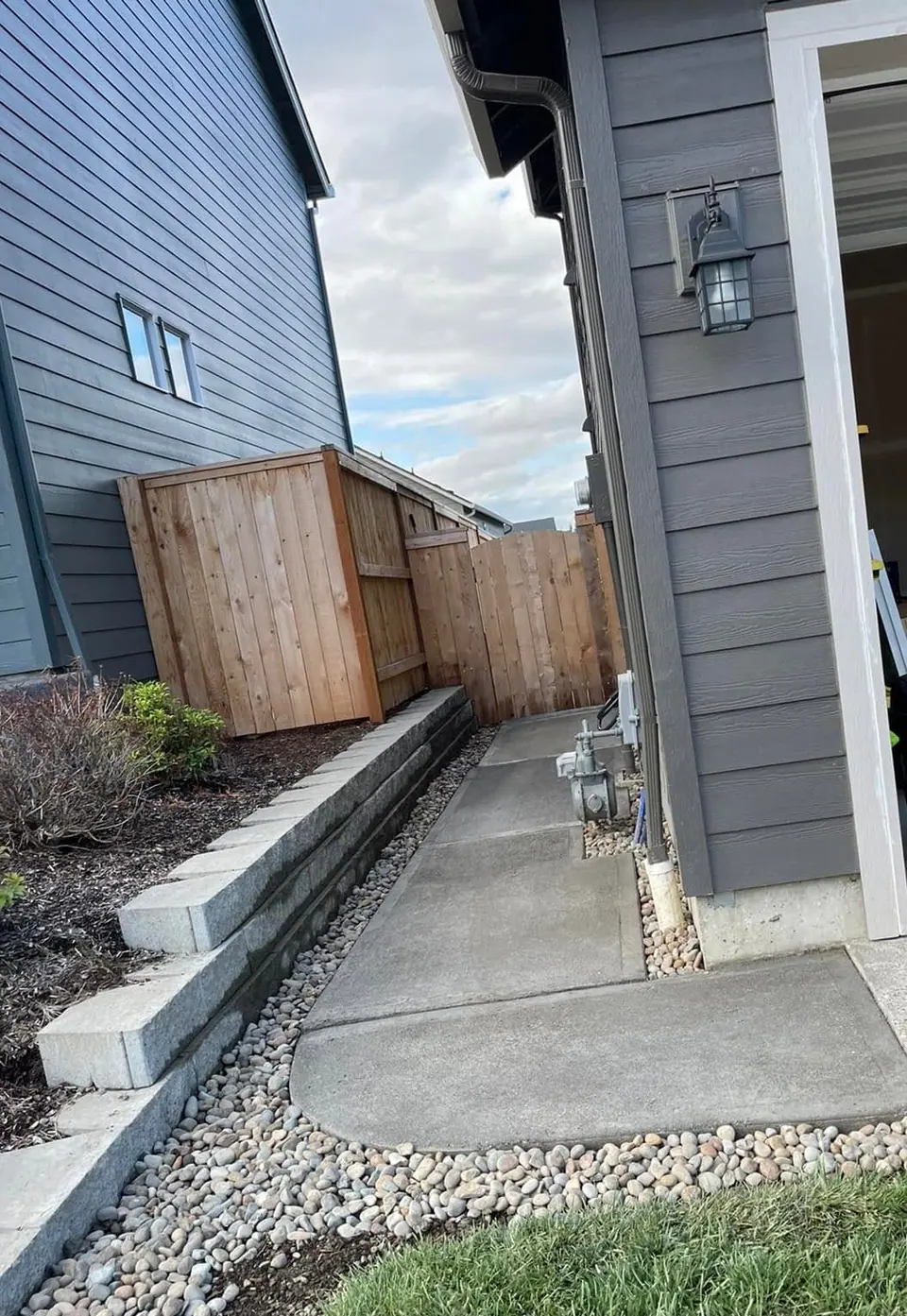
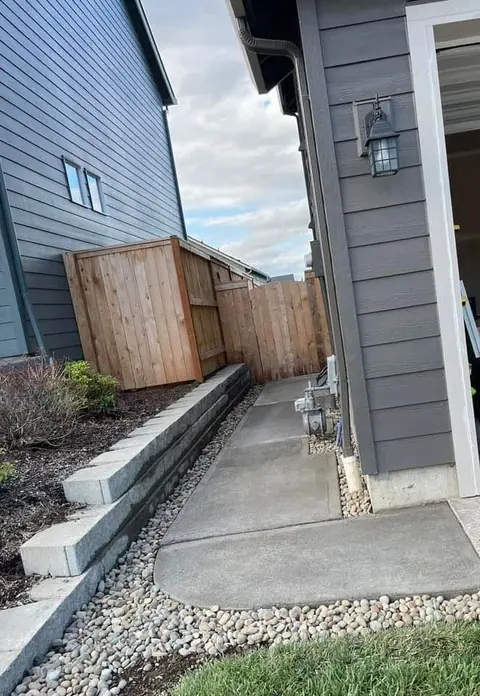
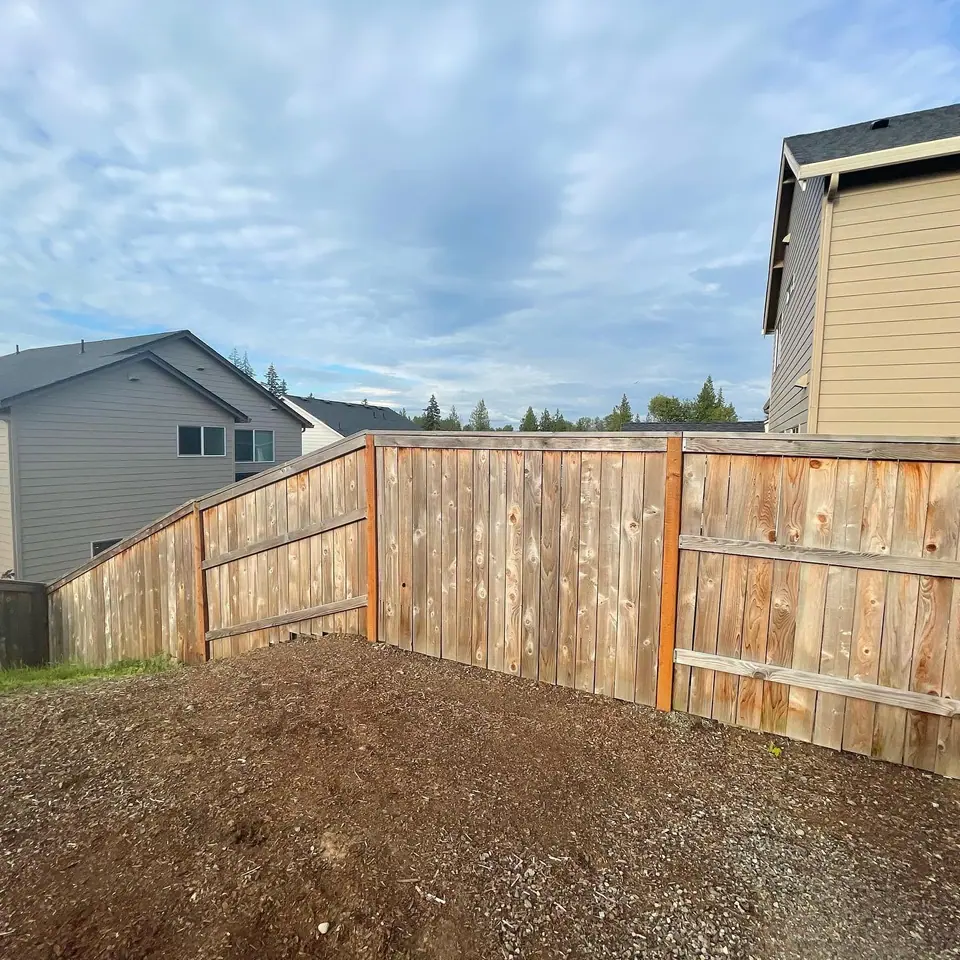
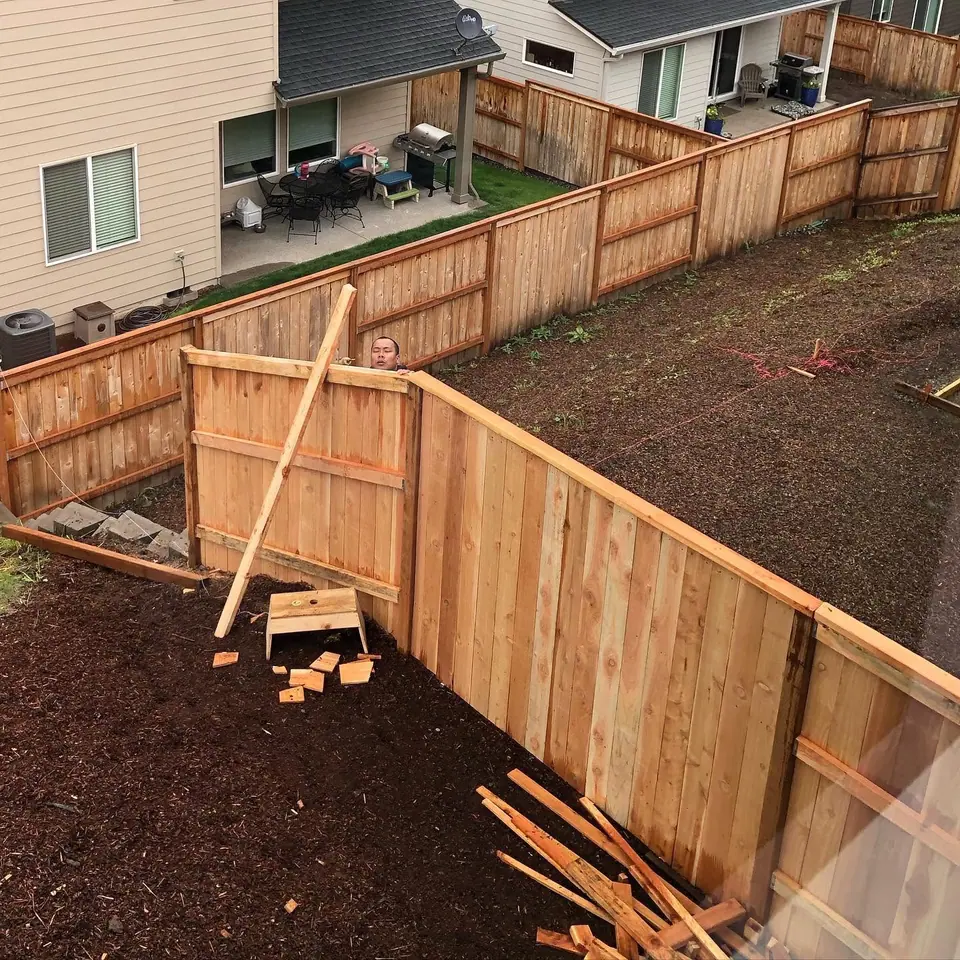
Very few Clark County yards are flat. We build fence lines either racked to follow the grade or stepped down a slope, depending on what looks right and what the fence has to contain. Where a fence meets a retaining wall or crosses a drainage path, we detail it so neither one undermines the other.
What we build
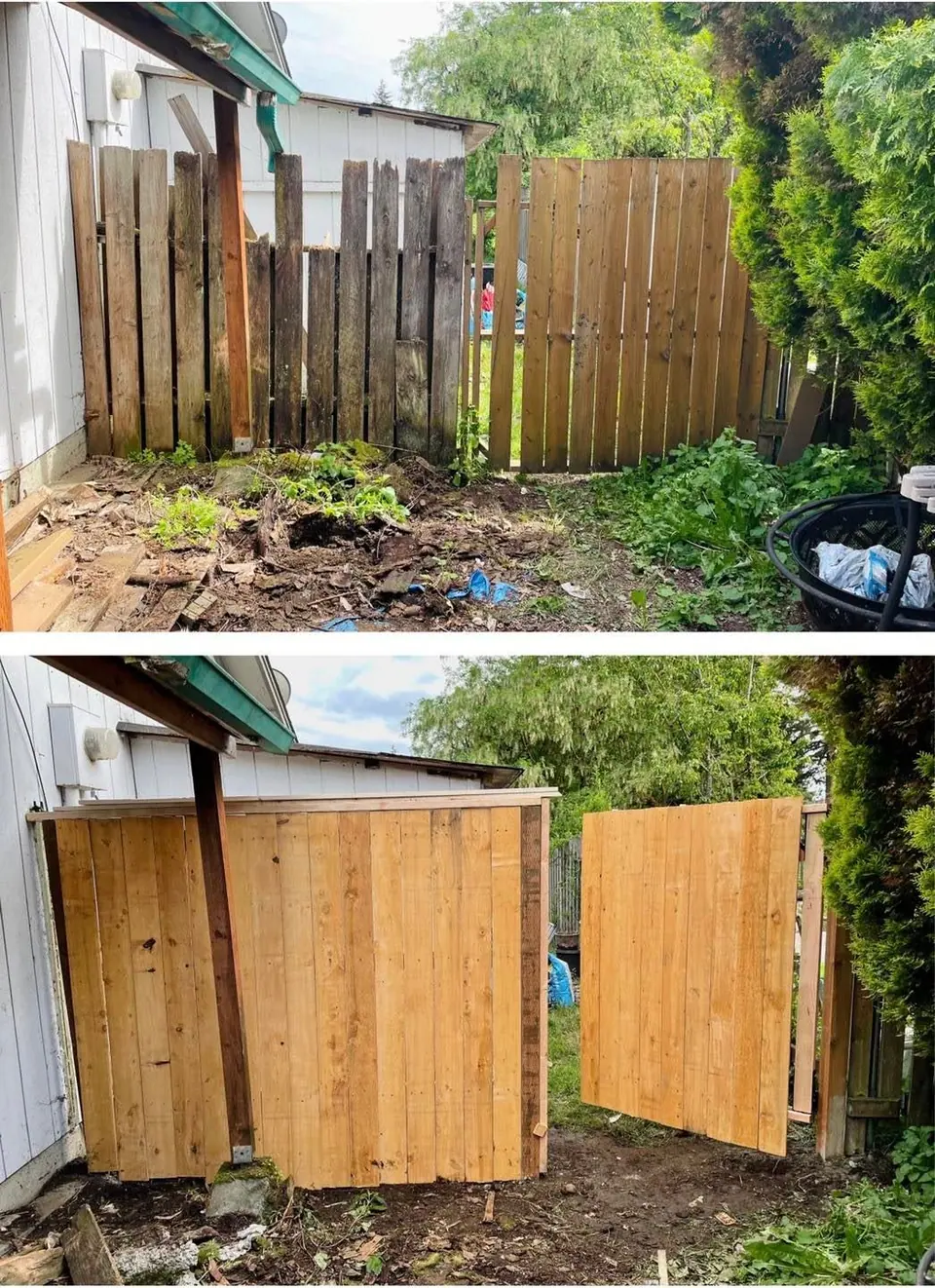
Cedar privacy fence, board-on-board and good-neighbor styles, horizontal slat fencing, picket and semi-private, single and double gates, and fences integrated with retaining walls and planting beds. We also handle removal and disposal of the old fence.
What is included
- Post holes sized for our wet-season ground
- Posts set in crowned concrete that sheds water
- Braced gates on weight-rated hardware
- Racked or stepped to follow real grade
- Old fence removal and haul-off
- Coordinated with walls, beds and drainage
Every quote is fixed and in writing. We walk the site, tell you what the job actually needs, and price it. If we find something during the walkthrough that changes the scope, you hear it then — not as a change order halfway through.
Need fence installation?
Free on-site estimates across Clark County. We walk the property with you, tell you what it actually needs, and put a fixed price in writing.
Fence Installation: common questions
Do I need a permit to build a fence?
Most jurisdictions in Clark County allow residential fences up to a set height without a building permit, with lower limits in front yards and near driveway sight lines, but the specifics differ by city. Property line location, easements and HOA rules matter just as much. Confirm with your city or the county before construction.
How long does a cedar fence last here?
Fifteen to twenty-five years for the boards in our climate, longer if it is stained and maintained. The posts almost always go first, which is why how they are set matters more than the boards.
Can you build on the property line?
You will need to know where the line actually is. We can build to a surveyed line or set back from it, but we do not guess — a fence built on an assumed line is a dispute waiting to happen. If there is any doubt we recommend a survey first.
How deep do fence posts go here?
Deep enough to get well below the zone that softens and moves through our wet season, and deeper for taller fences and gate posts. Our ground is saturated for months at a time, which is exactly when wind loads are highest — a shallow post in soft winter ground is how a fence ends up leaning after the first big storm.
Should posts be set in concrete or gravel?
Both are defensible and it depends on the post and the ground. Concrete gives maximum rigidity but can hold moisture against a timber post if the detail is poor; compacted gravel drains freely and is easier to reset later. Where posts rot early, the cause is usually water trapped at the collar rather than the choice itself.
Why do fence posts rot at ground level?
Because that is where wet timber meets air. Seven months of damp ground keeps the buried section saturated, and the few inches at the surface get repeated wetting and drying, which is the worst possible condition for wood. Detailing that sheds water away from the post collar is what buys you the extra years.
Cedar, pressure-treated or vinyl?
Cedar looks the best and weathers to grey gracefully; pressure-treated costs less and lasts well in ground contact but moves and checks more; vinyl needs no finishing but cannot be repaired discreetly and can grow tired-looking in shade. In a wet climate the choice is mostly about how much maintenance you genuinely intend to do.
Should I stain or seal a new cedar fence?
Only if you actually want to keep the colour, and only if you will keep doing it. Finishing extends the look considerably in our climate but it is a recurring job every few years. An unfinished cedar fence is not failing — it is going silver-grey, which plenty of people prefer.
How do you build a fence on a slope?
Either stepped, where each panel stays level and drops at each post, or racked, where the rails follow the ground and the pickets stay vertical. Stepped suits formal panel styles and leaves triangular gaps at the bottom; racked follows the ground closely and suits picket and board fences. Which looks right depends on the slope and the style.
How do you handle gates so they do not sag?
Bigger, deeper gate posts than the run posts, proper bracing running the right way, and hardware sized for the weight rather than the price. Gates are where fences fail first because they are the only moving part, and a wide gate on an undersized post will drop within a season.
Will you remove and dispose of my old fence?
Yes, and it belongs in the quote rather than as an extra at the end. Old fence removal is more work than people expect, particularly where previous posts were set in large concrete footings that have to come out of the ground before new posts can go in the right place.
How do I know where my property line is?
Survey pins if they can be found, or a survey if the boundary genuinely matters. Fences built on assumption are a recurring source of neighbour disputes, and moving a finished fence is expensive. Where there is doubt, some homeowners deliberately set the fence slightly inside the line to remove the argument entirely.
Do I need to talk to my neighbour first?
It is not our place to insist, but it is almost always worth it — particularly on a shared boundary where they see one side of it every day. Conversations about the line, the style and who pays are much easier before the posts go in than after.
Can a fence be built over a drainage line or septic system?
Post holes and buried services are a bad combination, so we need to know about drain lines, irrigation, gas, power and any septic drainfield before we dig. A drainfield in particular does not want posts through it or machinery over it. Tell us at the walkthrough and we will route around it.
How long does fence installation take?
A typical residential run is a few days: remove the old fence, set posts, let them set, then rails and pickets. Long runs, difficult access, rocky ground or old concrete footings to dig out add time. It is one of the jobs where access to the back yard changes the schedule most.
Can you match an existing fence?
Usually in style, rarely in colour. Weathered cedar has a tone that new timber will not have for a couple of years, so a repaired section will read as new for a while. Where a run is more than half gone, replacing the whole thing normally looks better than patching it.
What height fence can I build?
Limits vary by jurisdiction and are typically lower in front yards and near driveways and corners for sight lines, with HOA rules layered on top in many newer neighbourhoods. Because the specifics differ between Clark County and each city, confirming with the department covering your address is the only reliable answer.
Can the fence tie into a retaining wall?
Yes, and it needs planning rather than improvisation. Posts set into or immediately behind a wall add load to a structure that was designed for soil, and drilling into block after the fact can compromise it. If a fence is going on top of a wall, that is a decision to make while the wall is being designed.