Retaining Walls in Vancouver, WA
Replacing failed timber walls. Segmental block, natural stone and boulder walls engineered to hold Clark County grades and drain properly behind the face.
Free Estimate in VancouverRetaining Walls in Vancouver: what is different here
A huge share of Vancouver retaining wall work is replacement of pressure-treated timber walls built in the 1970s and 80s. Those walls had a service life of roughly twenty-five years and they are now well past it. The tell-tale signs are a forward lean, soil spilling over the top, and posts you can push a screwdriver into.
When we replace one, we fix what killed it. The originals almost never had drain rock or a drain pipe behind them, so saturated clay pushed on them every single winter. The block wall that goes in has a compacted rock footing, a buried base course, a full column of clean drain rock wrapped in fabric, and a perforated pipe daylighted somewhere real.
Access in established Vancouver neighborhoods is often the hard part. Narrow side yards, mature trees and close neighbors mean equipment choice matters, and we will tell you honestly at the walkthrough if a wall has to be built by hand and what that does to the price.
How we build it
- Compacted crushed rock footing on undisturbed soil
- Buried base course for stability
- Clean drain rock and filter fabric behind the full face
- Perforated drain pipe daylighted to a real outlet
- Geogrid soil reinforcement where the design requires it
- Honest guidance on when an engineer and permit are needed
A retaining wall is a structure, not decoration. It is holding back tons of saturated clay, and in this climate that clay is saturated for six months of the year. The walls that fail around here almost always fail for the same reason: nobody dealt with the water behind them.
About 20 minutes south of our Ridgefield shop. Estimates in Vancouver are free, and the price we put in writing is the price.
Full detail on how we build retaining walls · Everything we do in Vancouver
Retaining Walls we have built
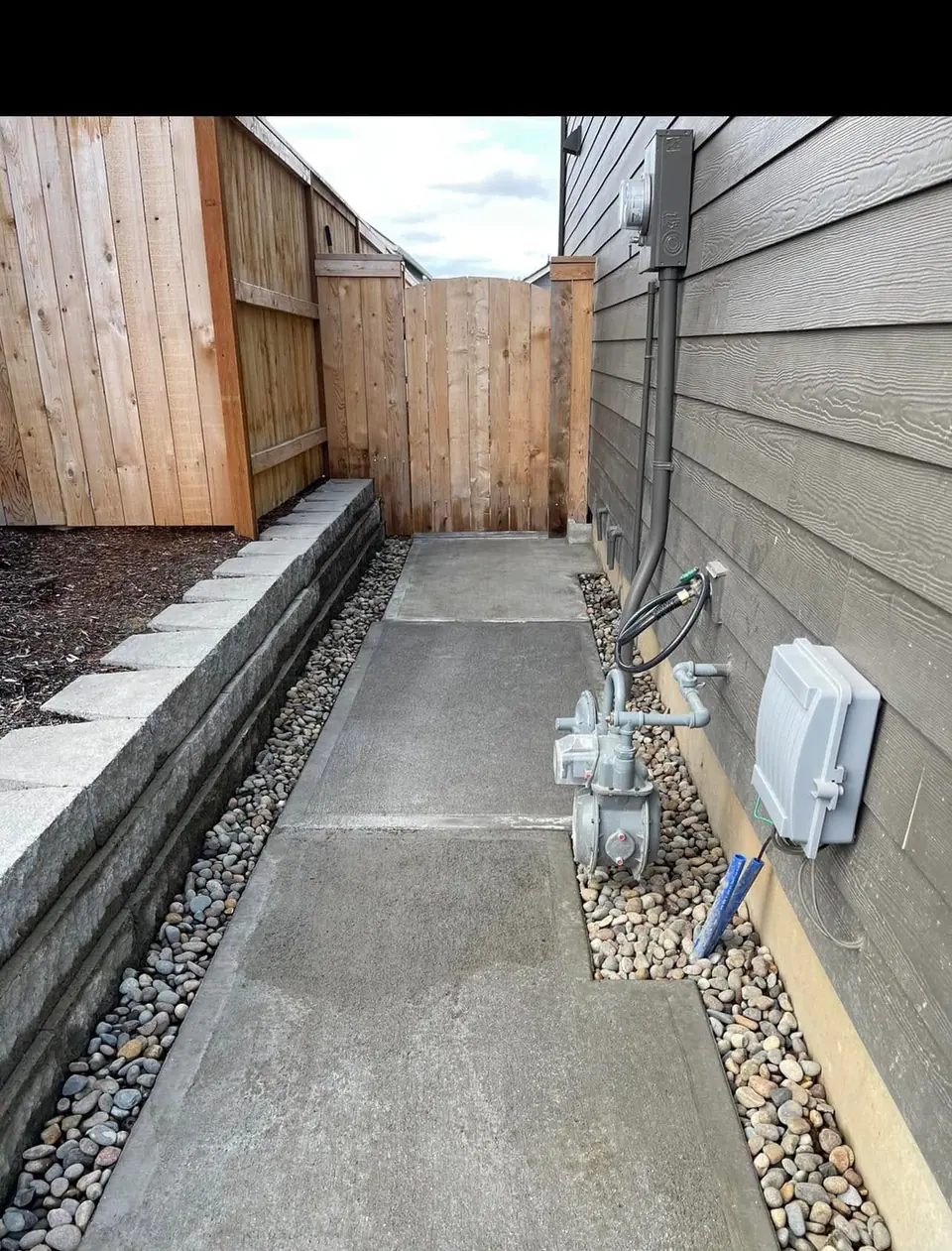
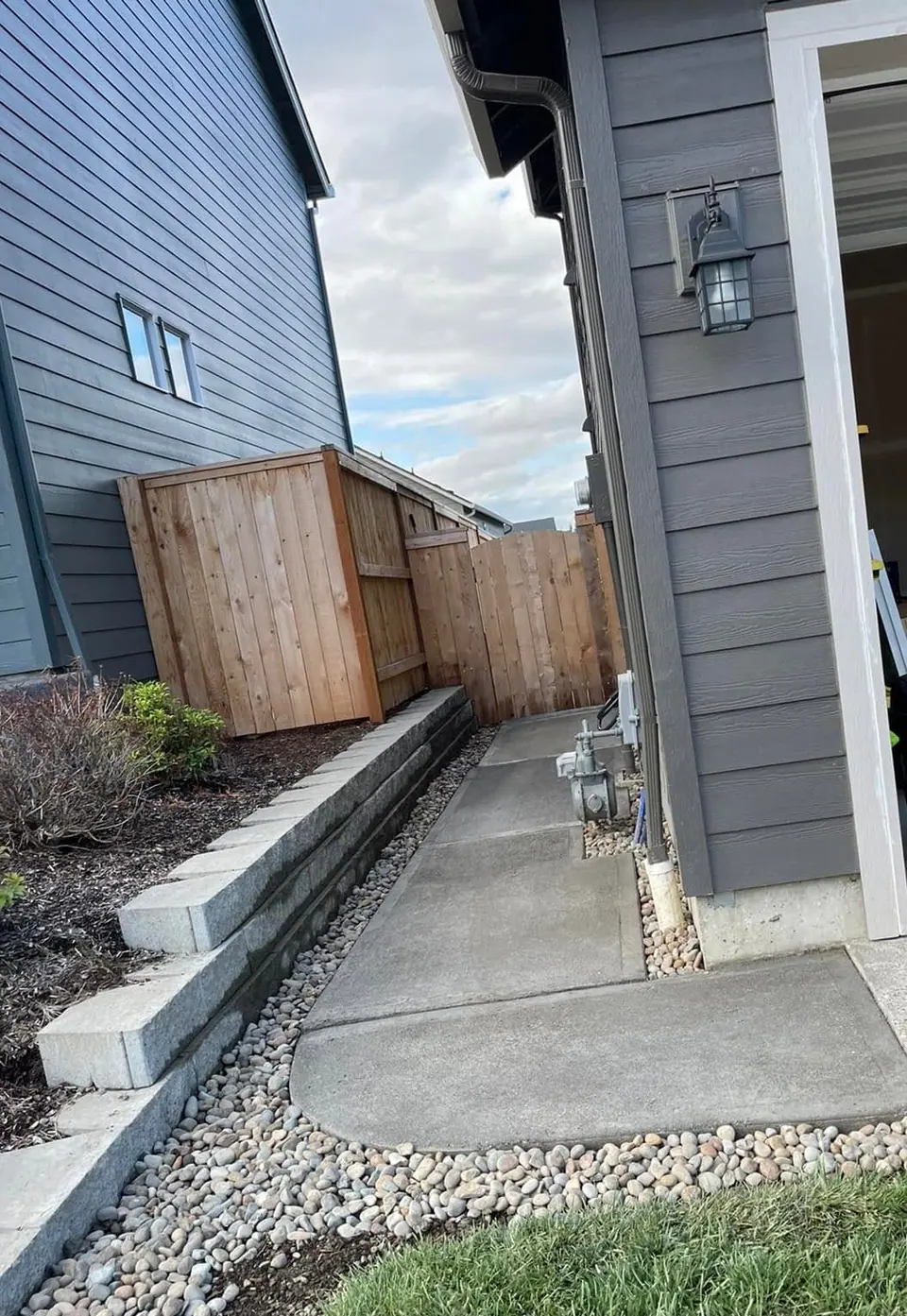
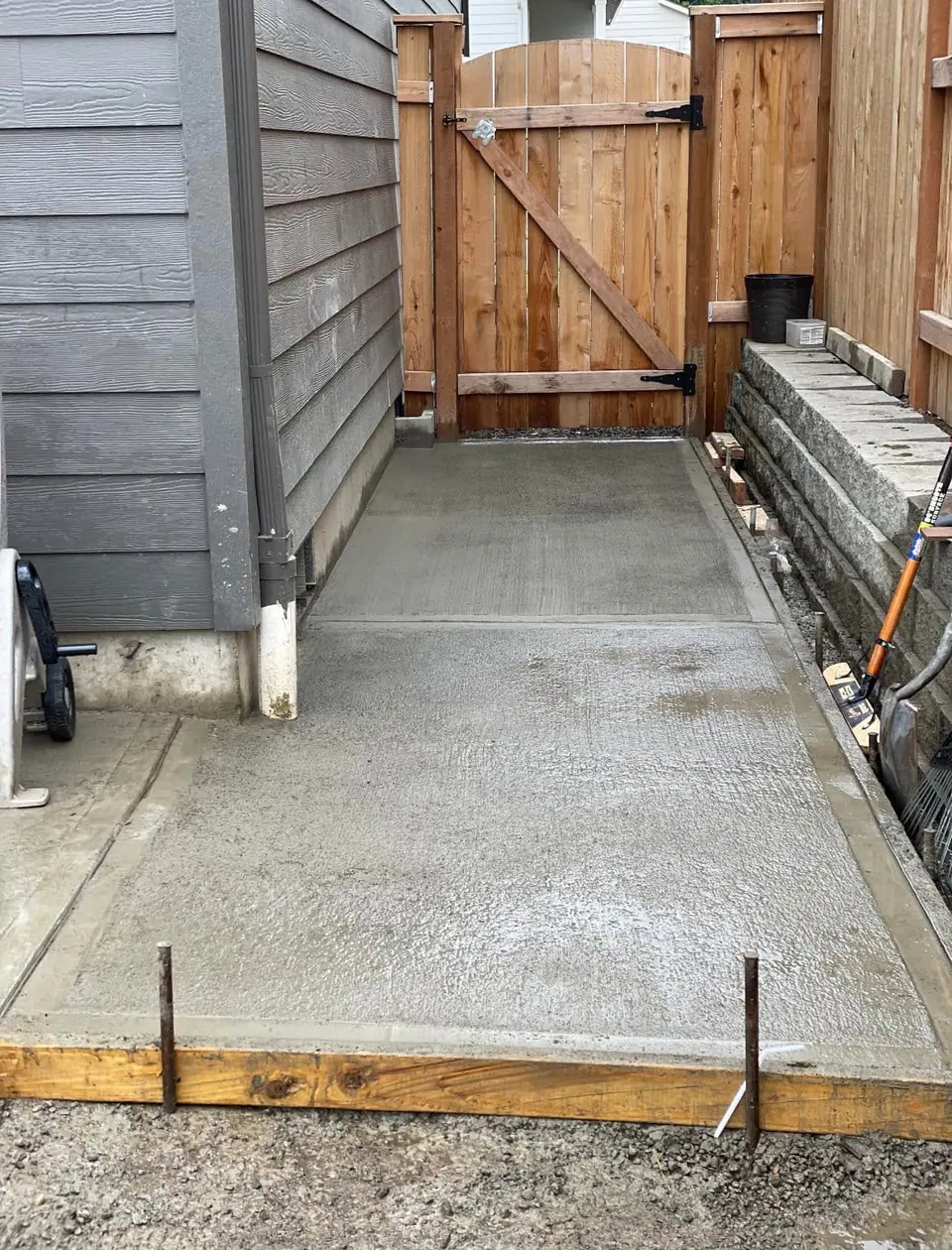
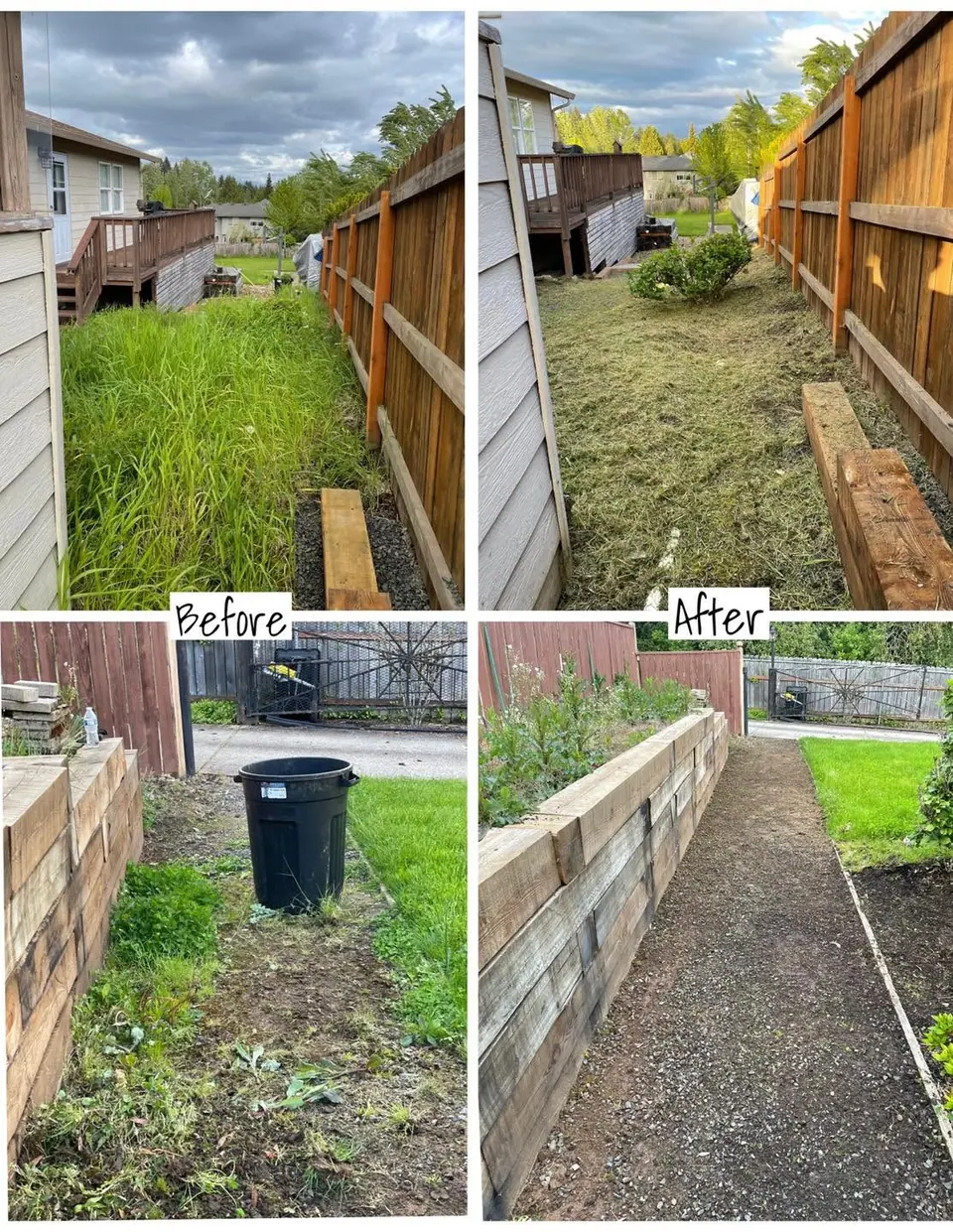
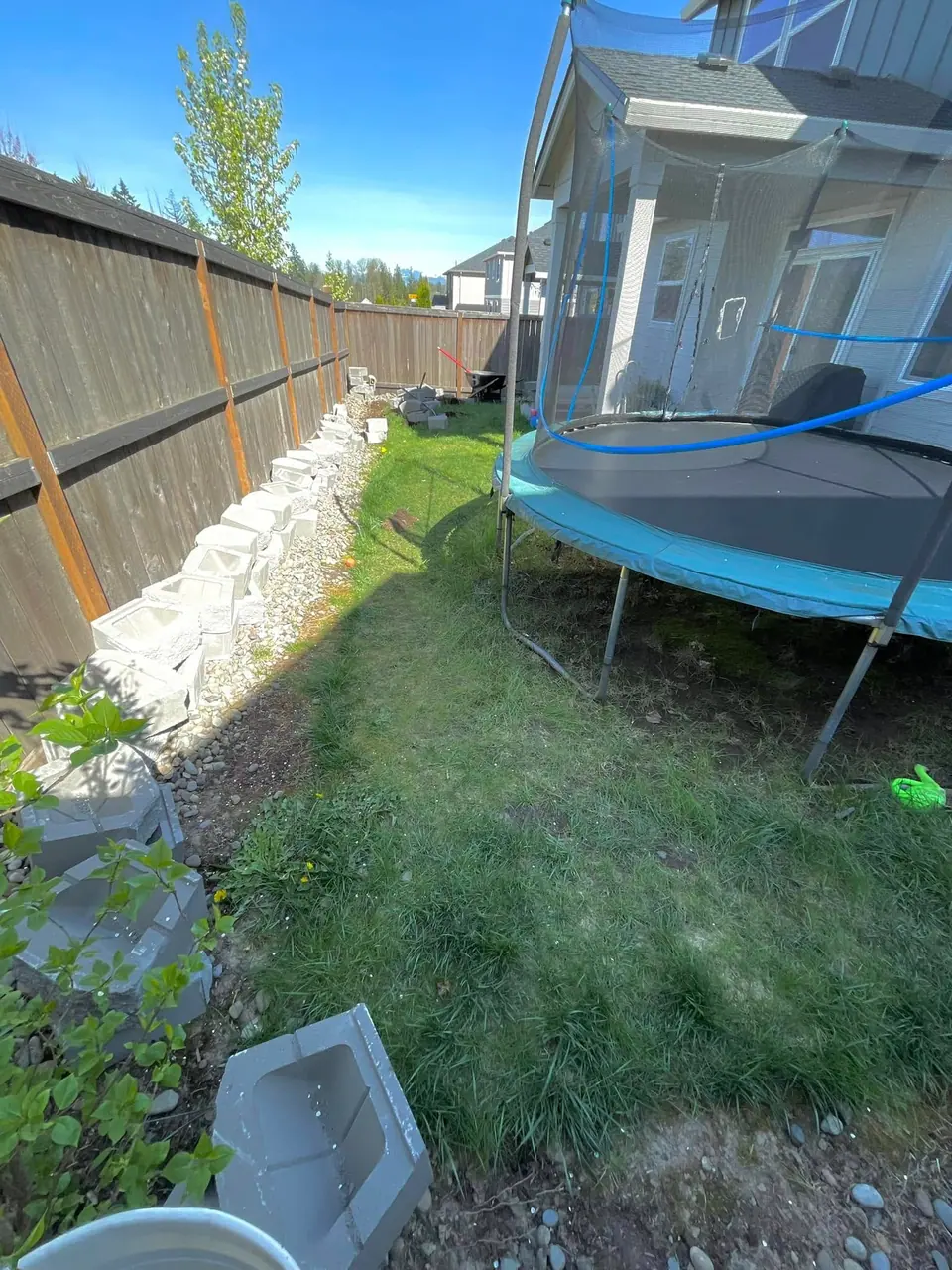
Retaining Walls in Vancouver
Free on-site estimates across Clark County. We walk the property with you, tell you what it actually needs, and put a fixed price in writing.
Retaining Walls in Vancouver: questions we get
Why do so many older Vancouver walls lean?
Because a great many of them were built with no drain rock and no drain line behind them. Between October and May the retained soil is saturated, and saturated soil pushes far harder than dry soil. That hydrostatic pressure is doing the damage, not the block.
Can our leaning wall be repaired or does it come out?
Be wary of an answer given without a look. A wall that has moved has moved because of what is behind it, so face repairs generally buy a year or two. Sometimes a section can be rebuilt; often the honest answer is that it comes down, gets proper drainage and goes back up.
Do retaining walls count toward impervious surface in Vancouver?
The wall footprint itself is usually a minor consideration, but the patio, path or parking area a wall is built to create very much is. Because walls and the surfaces they support tend to be designed together, it is worth understanding your coverage position before the design is settled.
Can you build a wall in a tight back yard with no machine access?
Yes, and it changes the price. Block, drain rock and backfill are heavy, and moving them by barrow through a narrow side yard is slow. We assess access at the walkthrough so the quote already reflects it rather than discovering it on day one.
Where can the drainage behind a wall actually outlet on a small lot?
That is the hardest part of wall design on these lots and the part cheap quotes skip. It needs a genuine destination — daylight somewhere lower, or a drainage system with somewhere real to go. A drain line that stops inside the backfill is decoration, and the wall will eventually show it.
Our wall is on the boundary with a neighbour. Does that complicate it?
It can, both practically and socially. Access to build the back of the wall, where the drainage outlets, and exactly where the line runs all matter. It is far easier to have that conversation with a neighbour before the excavator arrives than during.
Can a wall be built around mature trees in the older neighbourhoods?
Carefully. A wall footing excavated through the root plate of a large tree in Hough or Carter Park risks the tree, and roots growing against a wall later can move it. Sometimes the design has to step around the tree, which usually looks better anyway.
Is a seat wall the same build as a retaining wall?
No, and the distinction matters. A freestanding seat wall around a patio carries no soil load. A wall holding back grade is a structure with drainage, base and often reinforcement requirements. Where one becomes the other in a single run, the build changes partway along it.