Sod & Lawn Installation in Battle Ground, WA
Large lawns and irrigation reality. New sod lawns and full lawn renovations with real soil preparation — the part most companies skip.
Free Estimate in Battle GroundSod & Lawn Installation in Battle Ground: what is different here
Lawns in Battle Ground are often big — a quarter acre of turf is not unusual on an acreage lot. At that scale, two questions matter more than the sod itself: how it drains, and how it gets watered.
A large lawn without irrigation goes brown by mid-July here, because our summers are genuinely dry from July through September. That is fine if you accept it, and a lot of rural owners do. But it should be a decision rather than a surprise, and if you want it green all summer, the irrigation needs planning before the sod goes down, not after.
On big open lots we also grade for surface drainage before sod, since flat ground plus clay means winter puddling that will kill patches of new lawn in its first season.
How we build it
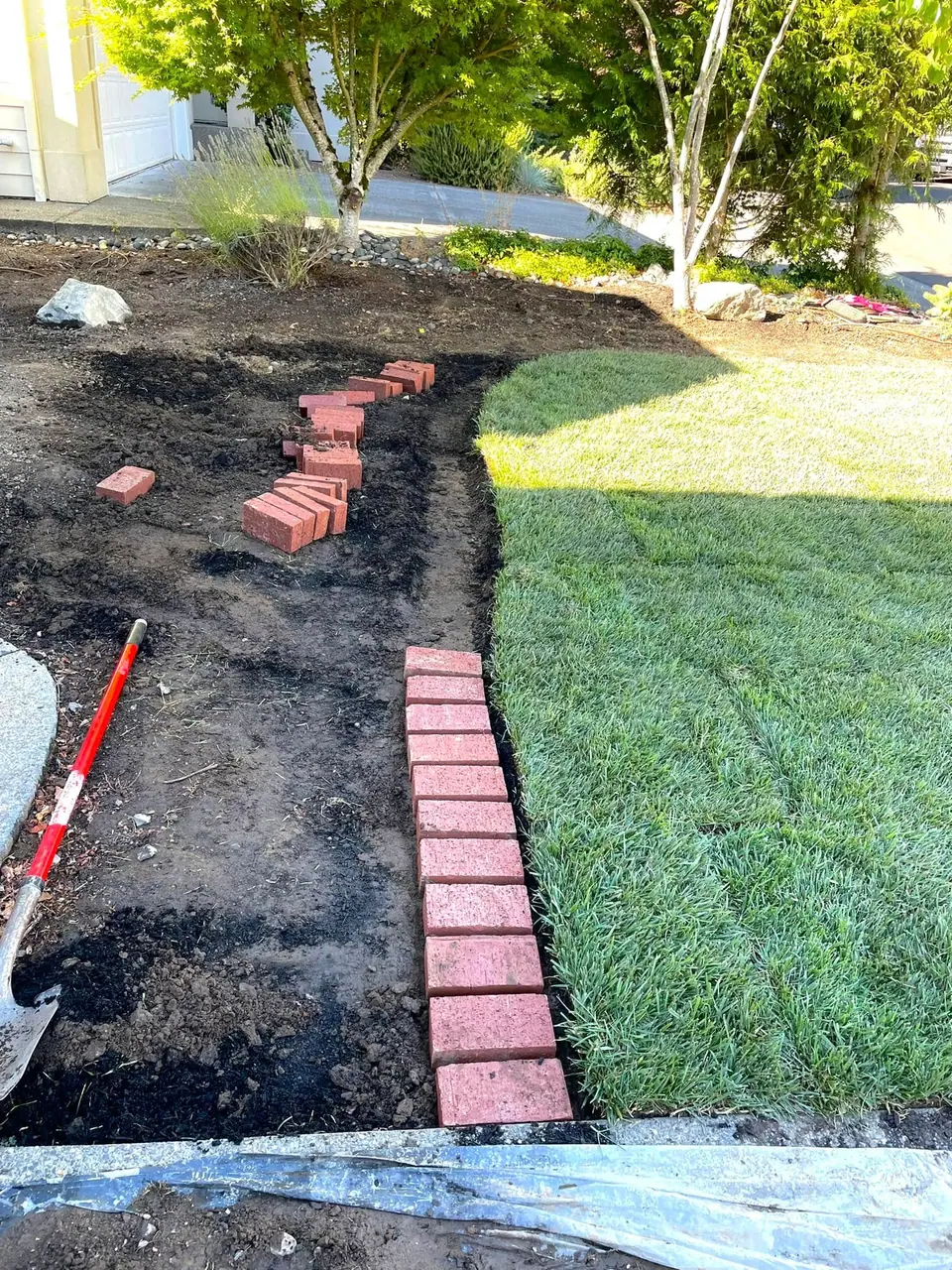
- Rip and till compacted construction subgrade
- Debris and rock removal
- Amended topsoil brought to depth
- Fine grading pitched away from the foundation
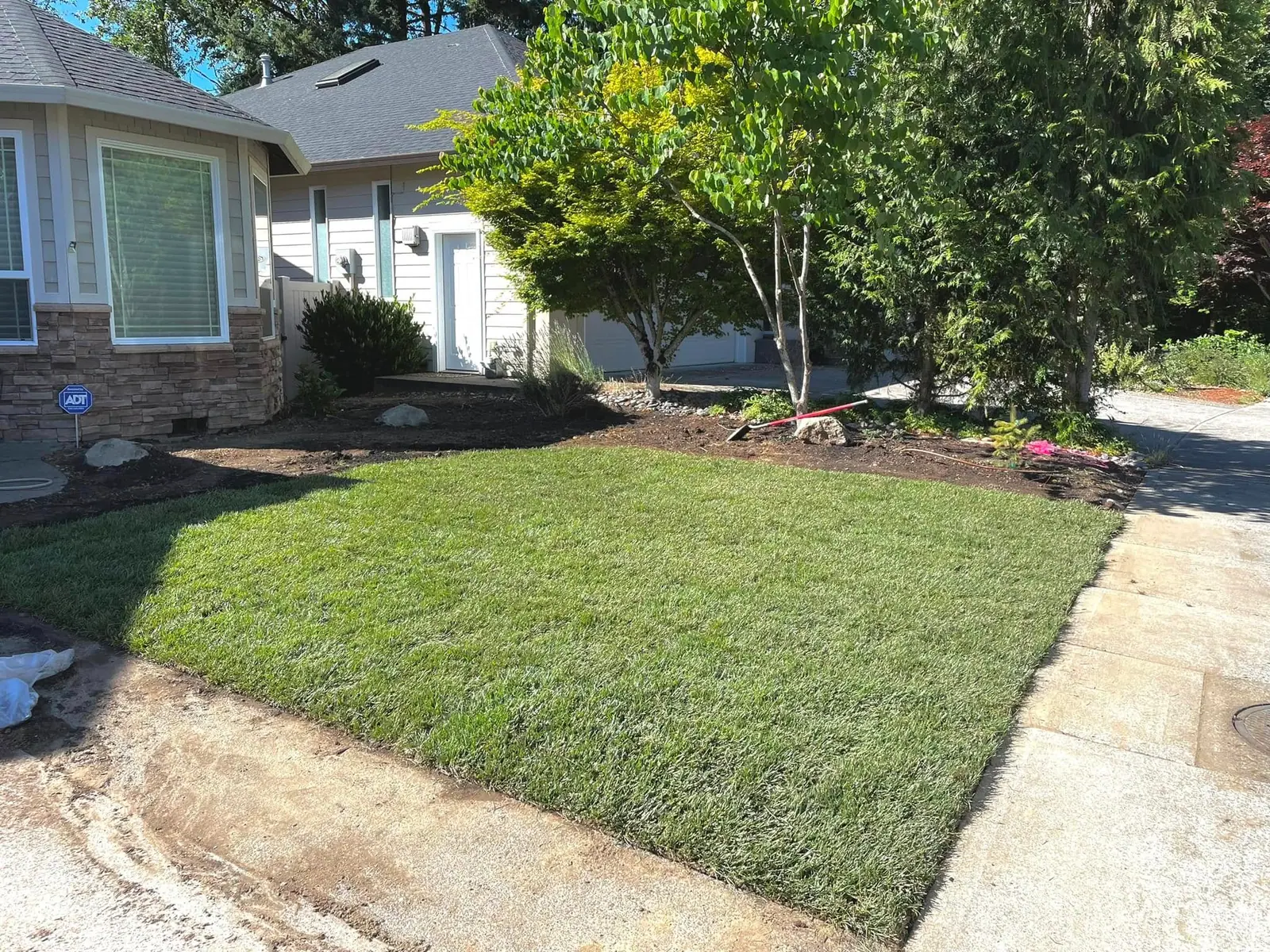
- Tight staggered seams, rolled in
- Written watering and first-mow schedule
Sod is the easiest landscape product in the world to sell badly. Anyone can roll green carpet over hard ground and collect a check — it looks perfect for three weeks and then thins out, because the roots hit compacted clay two inches down and stop.
Roughly 20 minutes east of Ridgefield. Estimates in Battle Ground are free, and the price we put in writing is the price.
Full detail on how we build sod & lawn installation · Everything we do in Battle Ground
Sod & Lawn Installation we have built
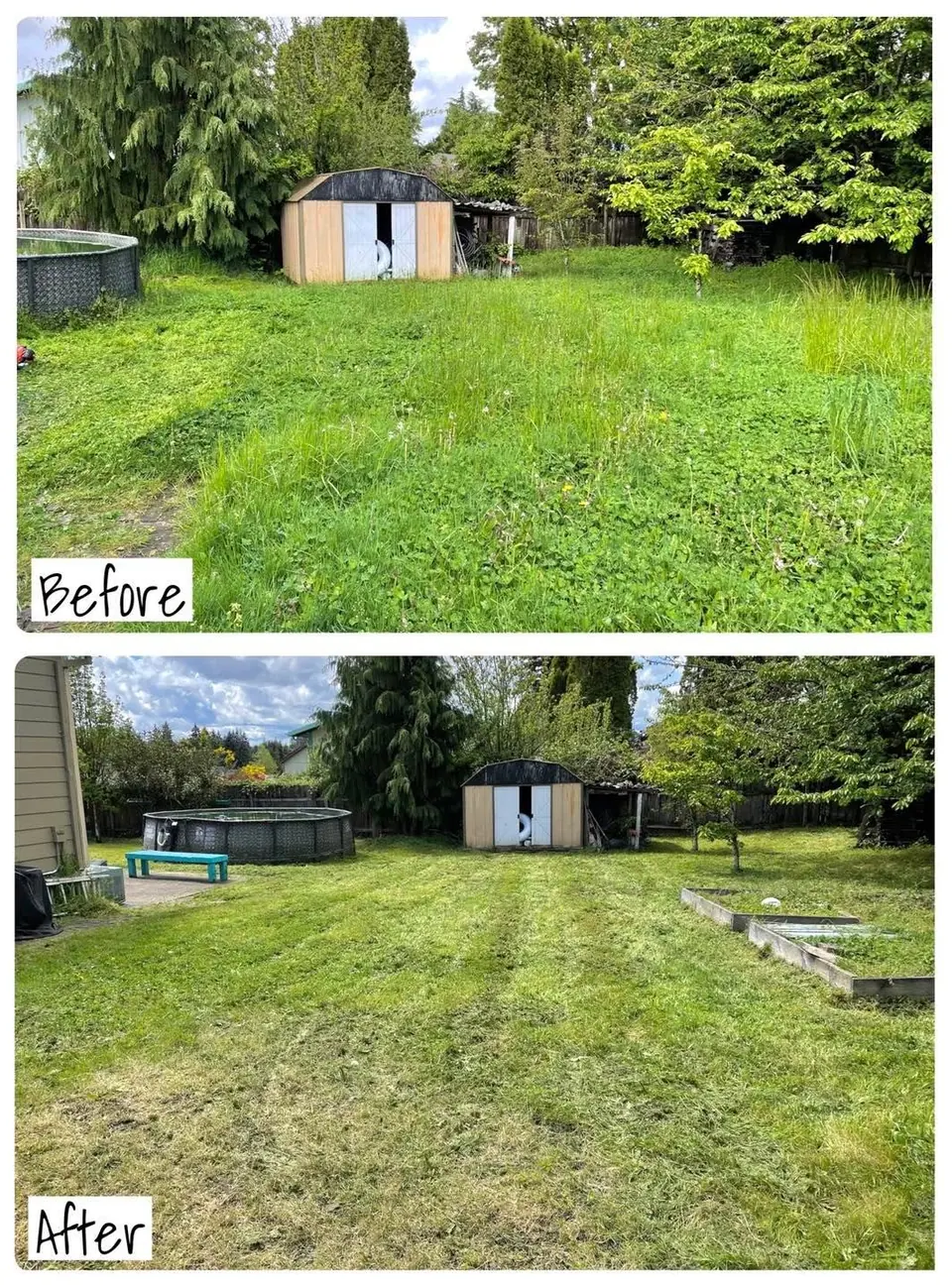
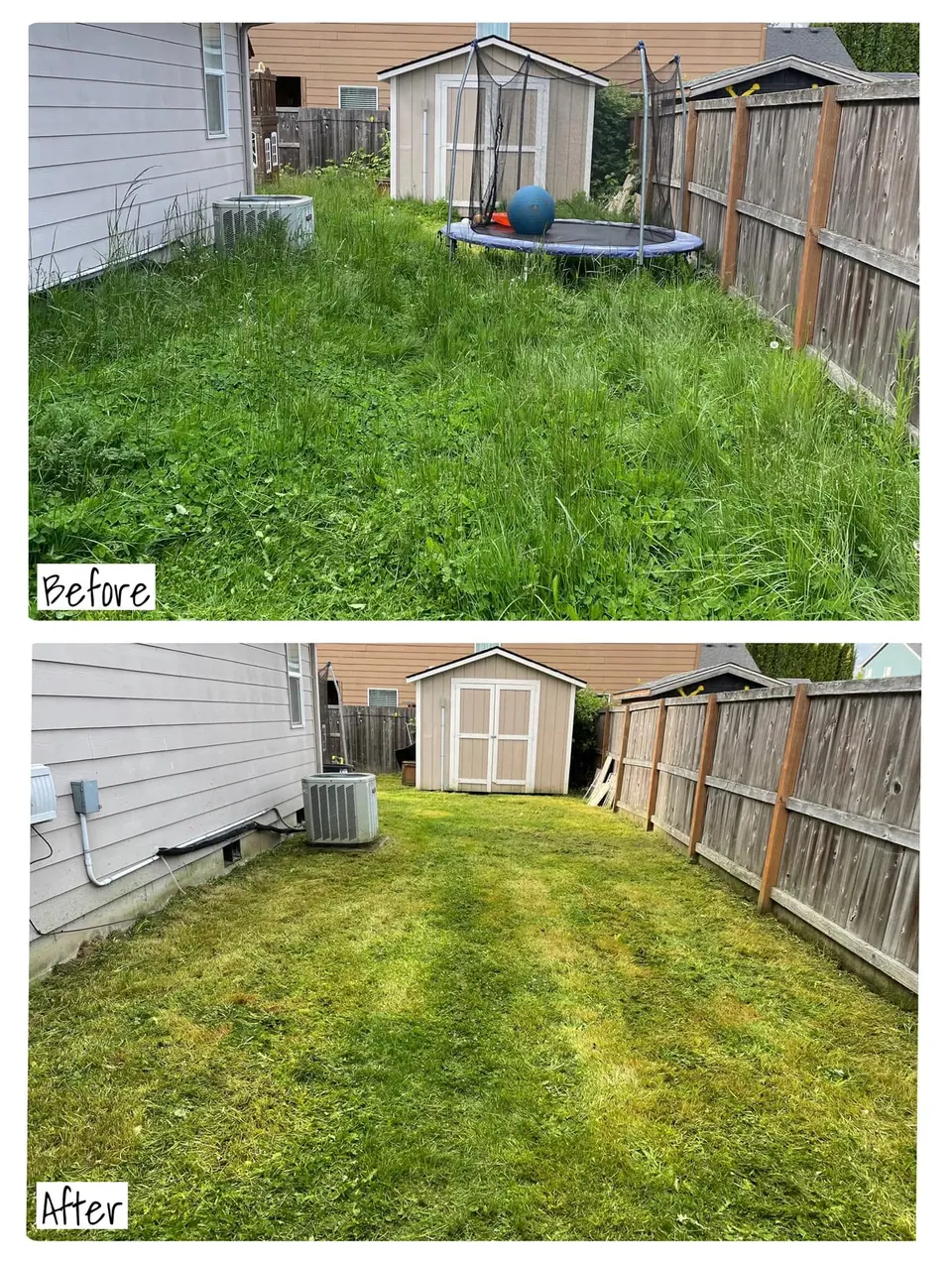
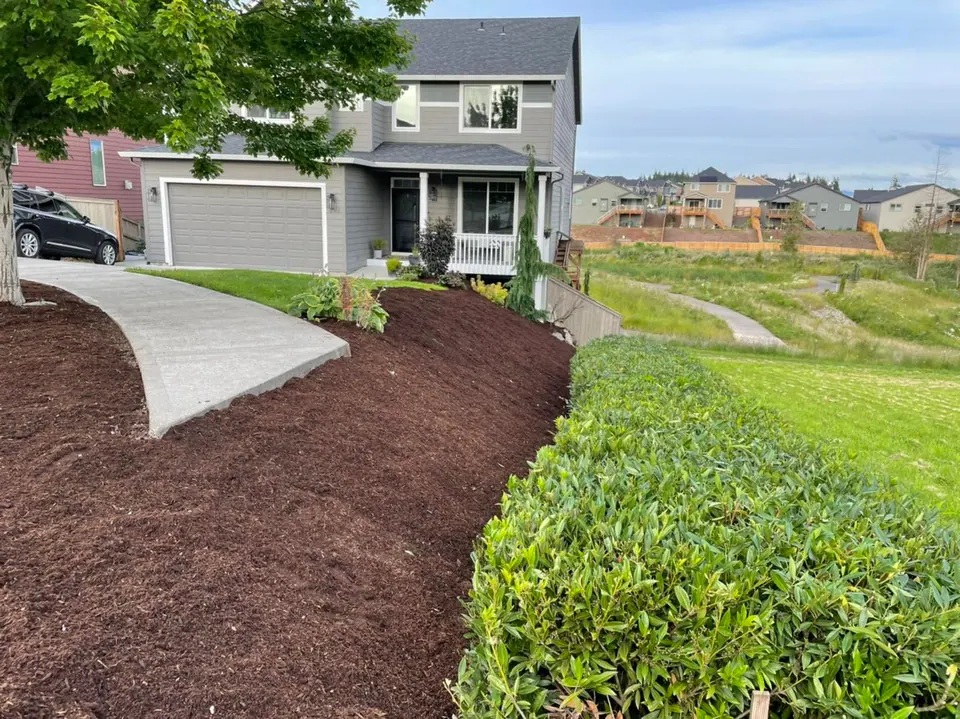
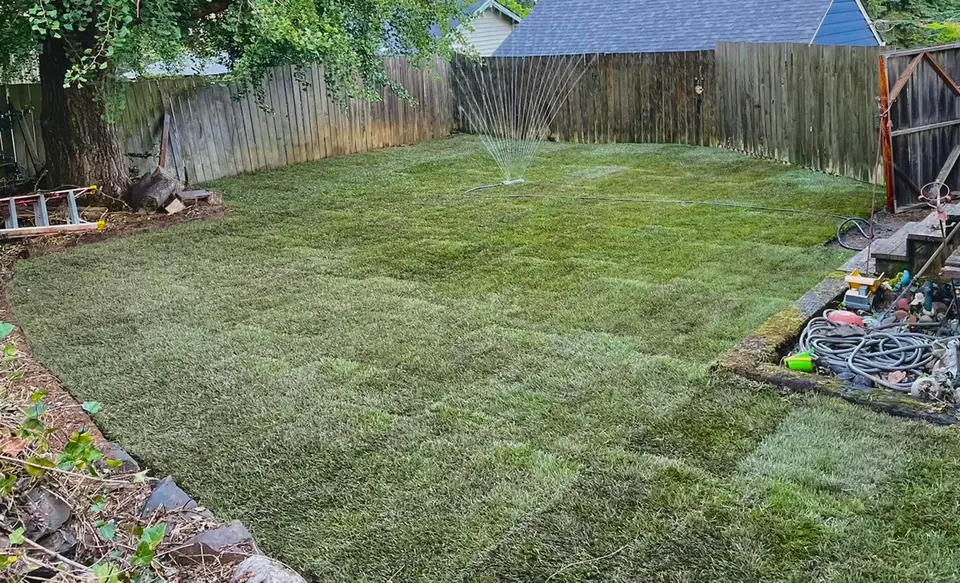
Sod & Lawn Installation in Battle Ground
Free on-site estimates across Clark County. We walk the property with you, tell you what it actually needs, and put a fixed price in writing.
Sod & Lawn Installation in Battle Ground: questions we get
Does a lawn on acreage need a different approach?
The preparation is the same but the scale changes the economics. Most acreage owners sod a defined area near the house rather than the whole property, with the rest left as field or pasture. Deciding where the lawn stops is one of the more useful conversations to have early.
Does the extra wind and slightly drier summer affect a lawn here?
It affects irrigation planning more than anything. An exposed north-county lawn dries faster than a sheltered Vancouver back yard, so zones and run times need to reflect that. It is not dramatic, but a system copied from a sheltered site will leave dry patches on the windward side.
Can you prepare a large lawn area with machinery?
Yes, and on acreage that is what makes a bigger lawn affordable. Machine grading, decompaction and soil spreading across an open area is far more efficient than the barrow work a tight town lot requires. Access is rarely the constraint out here.
Our new subdivision lawn is failing. Same story as everywhere else?
Largely. The newer Battle Ground developments have the same compacted subgrade and thin topsoil as Ridgefield. Fixing it means dealing with compaction, grade and soil depth rather than buying a different seed mix or more fertiliser.
Do we need to solve drainage before laying a lawn?
On flat ground, yes. A lawn on ground where water sits will thin, go to moss and never properly establish, and repairing it repeatedly costs more than fixing the drainage once. On acreage that usually means shaped swales rather than pipe.
How do we irrigate a large lawn on a well?
By designing to what the well can actually deliver. Available flow and pressure set how many zones you can run and how long each takes, so a large lawn on a modest well may need more zones running longer rather than a bigger system. It needs designing rather than assuming.
Is it worth sodding rather than seeding a big area?
Sod gives an immediate, weed-resistant result and holds ground that would otherwise wash; seed is considerably cheaper over a large area but needs a long establishment window our climate does not reliably provide. On acreage the cost difference is real, so it is a genuine decision rather than a default.
Can the lawn area be extended later?
Yes, and on acreage that is a sensible way to do it — establish the area you will actually use, live with it for a season, then extend if you want more. Just plan the irrigation to allow for it rather than having to reconfigure the system.